News
Palisades Permit Relief Moves Forward in LA
Palisades permit relief efforts make progress as Los Angeles officials outline specific exemptions and increased rebuilding support measures.
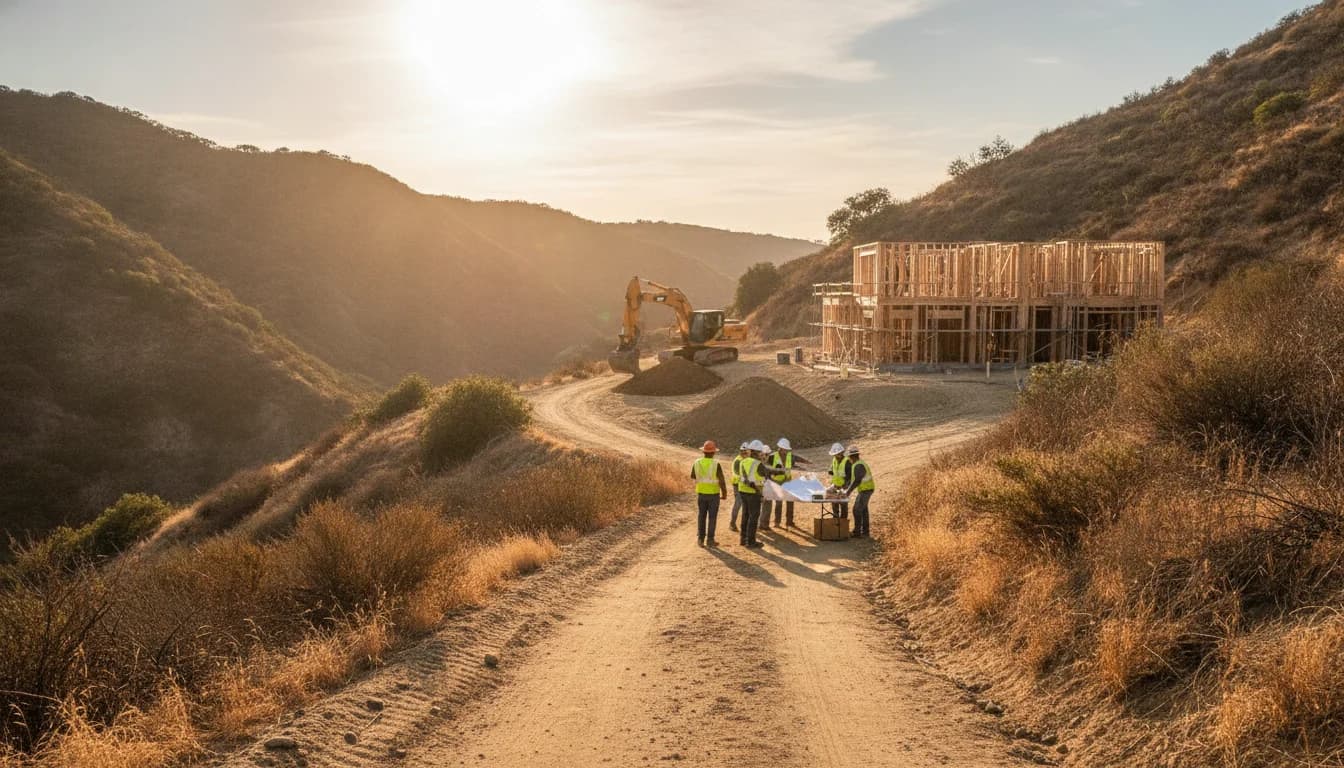
On October 9, 2025, Mayor Karen Bass announced actions to provide new relief to Palisades Fire survivors and accelerate community recovery, including a plan to establish a time-limited exemption to Measure ULA for Palisade homeowners, as part of a broader Return and Rebuild effort. This follows months of rapid rebuilding progress and a series of executive actions aimed at trimming barriers to reinhabiting fire-damaged parcels in Pacific Palisades. The mayor’s release highlighted that Pacific Palisades rebuilding permits are now moving faster than typical single-family projects before the wildfires, signaling a deliberate shift from emergency response to sustained recovery. The announcement was made in an official communication from City Hall and framed as a step toward stabilizing property markets, hastening construction timelines, and reducing upfront costs for homeowners who lost homes or were otherwise impacted by the Palisades fires. The City’s message also positioned this as a template for balancing fiscal considerations with disaster relief, an approach that local officials say could inform future post-disaster rebuilding efforts. Mayor Bass's October 9, 2025 release (mayor.lacity.gov)
Two weeks into the plan’s public rollout, city officials and residents were already parsing the practical implications of Palisades permit relief. The mayor’s office reported that Pacific Palisades rebuilding permits are being approved nearly three times faster than typical pre-fire timelines for single-family homes, with more than 850 rebuilding plans approved across 450 addresses and hundreds of permits in active review or construction phases. The executive action also noted that the municipal process has targeted debris removal, utility restoration, and expedited reviews to help neighbors return to their homes more quickly, a shift designed to shorten displacement while preserving safety standards. The Office framed these steps within a broader recovery framework, underscoring how permit relief and streamlined reviews are integral to the Palisades’ ongoing revitalization. “Construction is underway across the Palisades,” the release stated, signaling visible progress and a measurable impact on local housing supply as residents navigate the long road back to normal life. Mayor Bass's October 9, 2025 release (mayor.lacity.gov)
As part of the policy conversation surrounding Palisades permit relief, city documents and public letters reveal the fiscal landscape behind the relief policy. A January 2026 City Clerk filing — originally prepared for public posting — outlines the genesis of the relief plan, including the emergency actions issued by Mayor Bass, the initial and revised cost estimates from the City Administrative Officer (CAO), and the ongoing debate about how much relief should be waived. The filing notes that Mayor Bass issued Emergency Executive Order No. 1 in April 2025 to accelerate recovery, and that the CAO’s original estimate of potentially waived fees was $86 million, later revised upward to a maximum estimate of $278 million as the scope of eligible projects expanded. The document also highlights that the first Palisades rebuilding permit was issued on March 5, 2025, illustrating the pace of post-disaster approvals. For readers seeking the primary, contemporaneous references, the filing includes the council file and supporting materials that informed the debate about permit fees and waivers. City Clerk, 25-0006-S57_AM, public communication and attachments (cityclerk.lacity.org)
Opening, section one, and section two together establish the throughline of Palisades permit relief: an effort to lower the upfront fiscal barriers to rebuilding while preserving the city’s long-term fiscal health. The administration’s position is that relief can accelerate rebuilding without compromising the city’s ability to fund essential services, and that waivers should be time-limited to ensure that long-term budgets are not unduly strained. The City’s approach also recognizes that, in the wake of the Palisades fire, the average homeowner’s cost of rebuilding remains a critical barrier to recovery, and that targeted exemptions can unlock faster sales and reinvestment in the community. The plan has drawn support from a broad spectrum of community stakeholders, including residents who have faced significant displacement and organizations that assist Palisades survivors. The City Clerk’s file captures the public’s voices in the form of letters urging fee waivers, noting that the policy would significantly influence the pace of rebuilding and the financial viability of recovery for homeowners, small businesses, and landlords affected by the disaster. The assembled documents and public testimony provide a window into the balancing act between disaster relief and municipal finance that characterizes Palisades permit relief debates. City Clerk, 25-0006-S57_AM (cityclerk.lacity.org)
Section 1: What Happened
Announcement details and timeline
October 9, 2025 — A high-profile city announcement from Mayor Karen Bass lays out a plan to deliver new relief to Palisades fire survivors and accelerate community recovery. The plan centers on establishing a time-limited exemption from Measure ULA for Palisade homeowners and directing the City Finance Department to implement the rule once the City Council passes the corresponding ordinance. The mayor’s letter frames this as a critical step to unlock rebuilding and stabilize property turnover in the Palisades. The release also references ongoing coordination with private-sector partners to accelerate rebuilding programs and ensure that infrastructure and services are restored in parallel with construction. The press release notes that the Palisades rebuilding effort has already demonstrated remarkable speed compared with pre-fire benchmarks. Mayor Bass's October 9, 2025 release (mayor.lacity.gov)
April 25, 2025 — The State of California and the City announce parallel recovery measures, with Mayor Bass issuing Emergency Executive Order No. 1 to accelerate permitting and rebuilding in the Palisades. The executive order is described by city officials as a foundational action that catalyzes subsequent fee-relief discussions and ordinance drafting. The executive order is explicitly cited by the City’s internal communications as a key driver of the current relief strategy. These actions collectively set the stage for the later consideration of a one-time exemption to Measure ULA for Palisade homeowners. City Clerk 25-0006-S57_AM, public communication and attachments (cityclerk.lacity.org)
March 5, 2025 — The first Palisades rebuilding permit was issued, signaling tangible progress in the post-fire rebuilding wave. City officials have cited this milestone to illustrate the pace of approvals and the potential impact of fee-relief policies on the overall rebuilding timeline. The City Clerk filing references this milestone within the broader context of the permit-review process and the ongoing discussions about waivers and exemptions. City Clerk 25-0006-S57_AM, public communication and attachments (cityclerk.lacity.org)
October 9, 2025 — The mayor’s plan includes a proposed ordinance granting the Finance Director additional authority to promulgate a temporary exemption to Measure ULA for Palisades homeowners affected by the fires. The plan also contemplates a separate executive directive to implement the exemption once the ordinance is adopted, with the aim of hastening sales and rebuilding in the Palisades. In the press release, the mayor emphasizes how the measure can accelerate recovery by addressing a key financial barrier to rebuilding and sale activity, while stressing that the exemption would be time-limited to preserve fiscal accountability. Mayor Bass's October 9, 2025 release (mayor.lacity.gov)
Key numbers and projections
The city’s published materials show a multi-year arc for permit-relief planning, including the CAO’s initial and revised cost estimates for waiving rebuild-related fees. The CAO initially projected potentially waived fees in the $86 million range, then updated the estimate to as much as $278 million under a broader interpretation of eligible projects and size assumptions. These figures—used in public deliberations and communications with City Council—illustrate how policy scope can dramatically affect the magnitude of relief and the corresponding fiscal implications for the City. The City Clerk’s public communication summarizes these estimates and underscores the need for careful analysis of the financial effects of waivers. City Clerk 25-0006-S57_AM, public communication and attachments (cityclerk.lacity.org)
The plan’s operational impact on permitting speed is reflected in the mayor’s own numbers: “Pacific Palisades rebuilding permits are being approved nearly three times faster than typical single-family home projects before the wildfires, and more than 70% of single-family permit clearances are no longer required.” This performance signal suggests that the relief strategy can translate into tangible time savings for homeowners who are trying to rebuild in a constrained housing market. These figures come directly from the Oct. 9, 2025 release and are cited by city officials as evidence that policy design is shaping a faster, more predictable rebuilding timeline. Mayor Bass's October 9, 2025 release (mayor.lacity.gov)
The public-drafting materials also recount the first-hand experience of Palisades residents, including the number of rebuilding plans approved and those under review. The mayor’s office notes that more than 850 rebuilding plans have been approved for over 450 addresses, with hundreds more in the pipeline. The precise numbers provide a concrete sense of the scale of the rebuilding effort and the potential impact of fee relief on project throughput and neighborhood stability. Mayor Bass's October 9, 2025 release (mayor.lacity.gov)
Section 2: Why It Matters
Impact on Palisades homeowners and rebuilders
The Palisades relief plan speaks directly to homeowners who faced existential cost pressures in the wake of the January 2025 fires. Public testimony and internal communications emphasize the central fairness argument: disaster victims should not be penalized with added fees while they rebuild. The City Clerk’s filing includes a public letter urging fee waivers, noting that the costs of rebuilding—especially in the context of insurance gaps and financing constraints—can prove insurmountable for some homeowners. The argument for relief rests on balancing short-term housing stability with long-term fiscal resilience. This is the frame that has defined the policy debate and guided subsequent legislative and administrative actions. City Clerk 25-0006-S57_AM, public communication and attachments (cityclerk.lacity.org)
The public record also reveals the administrative rationale behind fee waivers. The CAO’s baseline estimates, coupled with the conservative scenario that 40% of affected properties would be rebuilt, are used to illustrate the city’s potential revenue implications under different rebuilding trajectories. The City Clerk’s filing articulates the debate around the appropriate scope of waivers, not simply as a charitable gesture but as a policy instrument that can accelerate housing turnover, stabilize neighborhoods, and re-stimulate local construction activity while preserving revenue streams necessary for city services. These arguments reflect a broader pattern observed in disaster recovery programs across the country, where immediate relief is weighed against long-range financial planning. City Clerk 25-0006-S57_AM (cityclerk.lacity.org)
The broader policy context includes the city’s ongoing effort to streamline rebuilding across adjacent districts and to coordinate with county-level recovery programs. LA County’s recovery site highlights that the local and regional response integrates permit deferrals and fee deferrals with an emphasis on speed and predictability. While the Palisades plan is city-specific, the underlying logic—reduce friction for disaster-impacted homeowners to rebuild quickly—resembles the approach used in other catastrophes in California. This alignment with broader state and county recovery efforts enhances the credibility of Palisades permit relief as part of a coordinated, multi-jurisdictional response. LA County Recovery, Rebuilding (recovery.lacounty.gov)
Fiscal implications for the City and the region
The fiscal calculus behind Palisades permit relief is complicated by the scale of potential waivers. The CAO’s estimates suggest a potential revenue loss if waivers are applied aggressively, but the city also notes that waivers can stimulate faster rebuilding, which in turn can increase long-term tax revenues through enhanced property values, sales taxes, and other revenue streams tied to renewed occupancy and activity. The City Clerk’s filing presents a nuanced view: even when allowances are broad, the city’s overall revenue picture can still improve in the longer term if rebuilding proceeds at a faster pace and landlords and homeowners re-enter the tax base more quickly. The document emphasizes that this is not a simple “forgive all fees” policy; it is a structured, time-limited measure designed to balance near-term relief with long-term fiscal accountability. City Clerk 25-0006-S57_AM (cityclerk.lacity.org)
The policy debate includes a critical question: what is the appropriate duration and scope of waivers? The policy framework calls for a phased approach, potentially transitioning from emergency relief to a permanent but limited exemption, contingent on legislative action. The Oct. 9, 2025 release characterizes the exemption as time-limited; this framing is essential to communicate to taxpayers and bondholders that the city is mindful of long-term fiscal health. The explicit goal is to accelerate recovery while preserving the city’s capacity to fund essential services during the rebuilding period. The public filings and press materials reflect this dual objective and the careful calibration that policy makers are attempting to achieve. Mayor Bass's October 9, 2025 release (mayor.lacity.gov)
Broader context: post-disaster permitting in California
- The Palisades permit relief initiative is part of a longer, nationwide pattern of disaster-driven regulatory relief designed to speed rebuilding. The public record cites historical precedents in California and beyond, noting that after disasters such as Woolsey, Camp Fire, and Northridge, authorities repeatedly used waivers and streamlined approvals to facilitate faster recovery. While the Palisades plan is tailored to a specific community, its logic aligns with these broader practices, and it is often cited in public testimony and policy discussions as a practical tool to rebalance the burdens of rebuilding with the urgent needs of residents. City Clerk 25-0006-S57_AM (cityclerk.lacity.org)
Section 3: What’s Next
Timeline and next steps
City Council consideration and potential ordinance adoption will determine whether the Measure ULA exemption becomes law. The City Clerk’s document lays out a path in which the Finance Director would promulgate the temporary exemption after adoption of the ordinance, followed by a formal executive directive to implement the exemption for Palisades homeowners affected by the January 2025 fires. The sequencing matters: a successful ordinance would enable the directive to become operational, enabling the exemption to take effect for eligible residents while enabling the city to monitor the cost and effectiveness of the program. The timeline, as laid out in the public filings, suggests that action could occur within the 2026 calendar year, contingent on council scheduling and committee reviews. City Clerk 25-0006-S57_AM (cityclerk.lacity.org)
The October 2025 press release underscores the plan’s emphasis on speed and coherence with other recovery programs. If the ordinance is adopted, the administration would implement a temporary exemption designed for Palisades properties impacted by the wildfires. The release also notes the potential for the exemption to influence property turnover and housing supply citywide, establishing a precedent for future disaster recovery policy. The public record suggests that the policy’s lifespan and scope will be actively monitored and adjusted in response to evolving conditions on the ground. Mayor Bass's October 9, 2025 release (mayor.lacity.gov)
Local commentary and professional analysis may influence the final design of the ordinance. As part of the broader discussion, the City Clerk’s communication includes a public comment from residents and advocates, illustrating the degree to which the Palisades community expects tangible relief and accountability. This input, together with the CAO’s financial modeling, will help determine the policy’s final form, including any sunset provisions, eligibility criteria, and administrative processes for applying for waivers. The city’s goal is to deliver clarity for homeowners while ensuring that the program remains fiscally prudent and administratively feasible. City Clerk 25-0006-S57_AM (cityclerk.lacity.org)
Closing: What this means for Palisades and beyond
The Palisades permit relief initiative represents a carefully calibrated balance between urgent relief and long-term fiscal responsibility. By centering the policy on a time-limited exemption to Measure ULA and coupling it with streamlined permitting, city leaders aim to unlock faster rebuilding while preserving the city’s capacity to sustain essential services. The two primary sources cited here — Mayor Bass’s Oct. 9, 2025 release and the City Clerk’s Jan. 8, 2026 filing — offer a precise view of the policy’s design, the public conversations surrounding it, and the specific numbers that have shaped deliberations. The plan’s broader implications for housing supply, property turnover, and regional recovery are likely to influence similar relief strategies in other disaster-impacted communities across California and beyond, as cities wrestle with the difficult tradeoffs between immediate reconstruction and long-run municipal finances. The Palisades case may serve as a reference point for how to combine fee-relief with targeted exemptions in a way that supports homeowners and stabilizes neighborhoods, while maintaining fiscal discipline.
For readers following this story, the City Clerk’s filing and the Mayor’s official releases remain essential primary sources to watch for updates on the ordinance’s status, the exemption’s implementation timeline, and any revisions to the CAO’s revenue projections as the recovery progresses. As the Palisades community continues rebuilding, observers will be looking for concrete indicators of relief effectiveness, such as permit-issuance pace, construction starts, and changes in housing turnover rates, each of which can be tied back to the policy’s design and its execution on the ground. City Clerk 25-0006-S57_AM (cityclerk.lacity.org)
About the author
Marisol Vega
Marisol Vega is the editor of Los Angeles Monday. She has covered City Hall, county government, and land use in Southern California, and edits the paper's daily report.