News
JCOD Warm Landing Place Facility Breaks Ground
Data-driven update on the JCOD Warm Landing Place Facility groundbreaking in downtown Los Angeles, with timeline and perspectives.
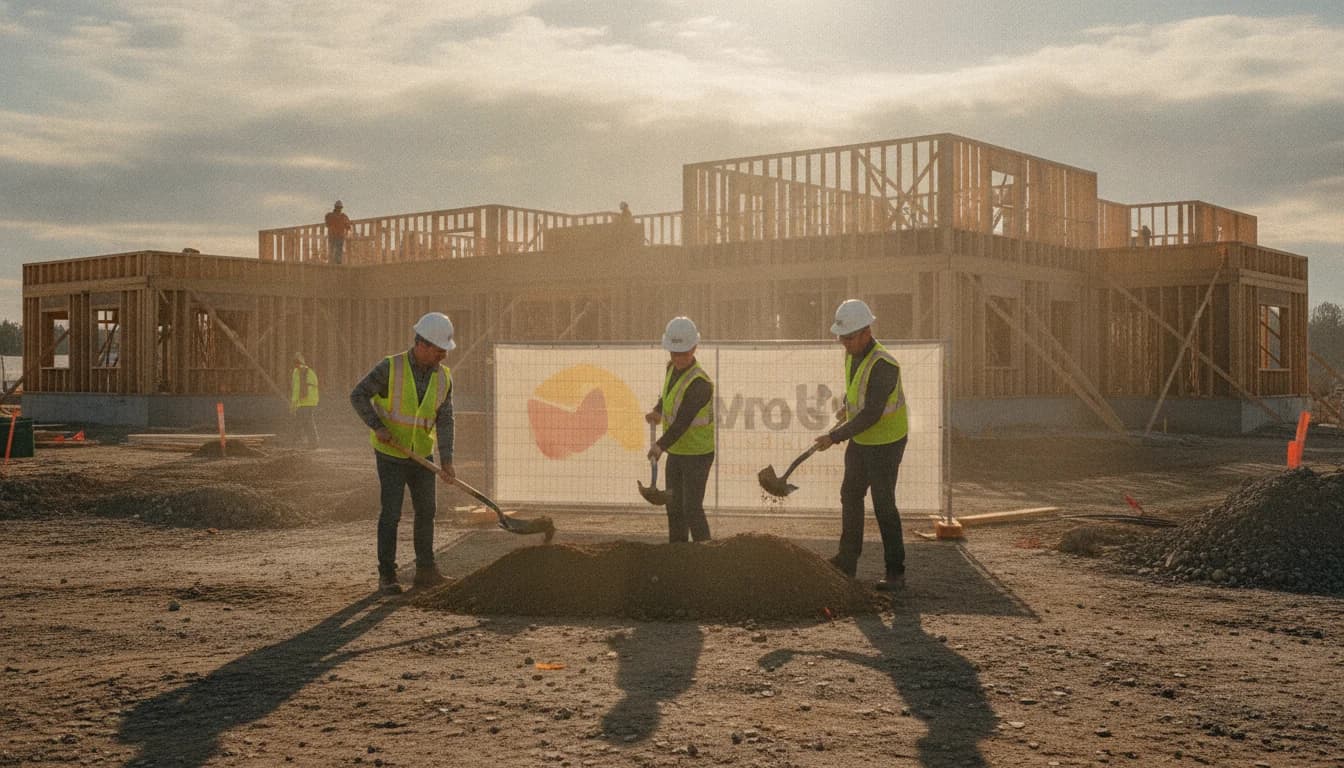
In a decisive step for Los Angeles County’s reentry strategy, the Los Angeles County Justice, Care and Opportunities Department (JCOD) announced on September 9, 2026, that construction has begun on a new Warm Landing Place Facility. The project, located directly across from Men’s Central Jail at 955 N. Vignes Street in downtown Los Angeles, marks a milestone in the county’s Care First, Jails Last vision by creating a dedicated space to connect people exiting custody with immediate stabilization services and short-term housing. The groundbreaking signals a shift toward trauma-informed, housing-first reentry infrastructure designed to reduce homelessness, curb recidivism, and promote long-term stability for justice-involved individuals. This development comes after years of planning and board-level consideration, and it places the Warm Landing Place (WLP) program on a permanent, purpose-built footing in the county’s reentry ecosystem. The city’s policy environment and the timing of funding reflect a broader push to align housing, health, and social services at the moment of transition from custody to community life. For a data-driven reader, this event translates into a concrete expansion of the county’s care-in-place approach at a high-need interface point. According to the JCOD release, the project’s scope includes a 13,000-square-foot, three-level facility designed to operate around the clock and to deliver voluntary housing and health services as part of a structured reentry pathway. (jcod.lacounty.gov)
The event underscores a longstanding partnership between county leadership, local public agencies, and community partners. In conjunction with the groundbreaking, JCOD emphasized its broader mission to create a continuum of care that begins at release and extends into long-term stability. The press materials detail that the new facility will provide housing support, behavioral health resources, health screenings, counseling, and other pathways toward sustained stability. The project’s significance is underscored by the involvement of key county figures, including Board Chair and First District Supervisor Hilda L. Solis, along with the Sheriff’s Department and Public Works, and it situates the WLP within Los Angeles County’s broader structural reform efforts. The county notes that the Warm Landing Place initiative, which began as a mobile and trailer-based service, has evolved into a permanent, multi-story facility designed to address immediate needs at a critical moment of transition. The announcement further states that the WLP program has already engaged thousands of justice-involved individuals, illustrating the scale of the county’s reentry work and the anticipated impact of a permanent site. For more on the groundbreaking announcement and the project’s design intent, see the official JCOD release. (jcod.lacounty.gov)
What Happened
Groundbreaking Announcement and Immediate Context
On September 9, 2026, JCOD announced the ceremonial start of construction for the Warm Landing Place Facility, a permanent reentry and short-term housing project located at 955 North Vignes Street, Los Angeles. The press release frames the event as the official turning point from planning to construction for a facility intended to support people leaving custody with immediate stabilization services and pathways to longer-term housing and health resources. The project’s footprint is substantial: a 13,000-square-foot building spread across three levels, designed for 24/7 operation and a range of services from housing accommodations to health screenings. The release situates the project as a keystone in the county’s “Care First, Jails Last” philosophy, aiming to reduce homelessness and improve community safety through dignified, trauma-informed intervention at the moment of release. The groundbreaking details, including the site’s location opposite the Men’s Central Jail complex, underscore the county’s intent to create rapid, direct handoffs to services at a point of acute transition. The official release makes clear that the facility will serve as a post-release navigation center, expanding beyond the department’s prior program footprint to a permanent, purpose-built site. The JCOD statement brackets the project as a critical evolution in the WLP program, which has grown since its June 2024 launch into a broader network of services. (jcod.lacounty.gov)
Facility Scope and Design Intent
The groundbreaking announcement emphasizes the physical and programmatic scope of the Warm Landing Place Facility. The building’s 13,000-square-foot, three-level design is described as capable of supporting welcome activities, immediate needs like counseling and health screening, and ongoing services that connect residents to longer-term housing and care. The site’s address—955 N. Vignes Street in downtown Los Angeles—places the facility at a strategic transit and services hub, directly across from the Men’s Central Jail complex. The press materials also highlight that the site will operate continuously, reflecting a commitment to uninterrupted access to services during the vulnerable post-release window. Beyond housing, the facility will integrate health-related screenings, behavioral health resources, and other supports essential to stabilizing individuals and reducing crisis-driven outcomes after release. The press release notes the program’s intent to deliver services on a scalable, durable basis, reinforcing the county’s plan to institutionalize reentry support through a dedicated capital project. For readers tracking the program’s evolution, the release explicitly ties the project to the ongoing Warm Landing Place program and frames the building as a public-facing hub for reentry services. (jcod.lacounty.gov)
Timeline, Funding, and Delivery
The September 9, 2026 release catalogs a broader timeline in which the groundbreaking accompanies an established track record for WLP and the surrounding reentry infrastructure. The county’s forward-looking statements reference the project as part of a continuum that began with the WLP program’s inception in 2024 and expanded to a permanent facility with dedicated staff and resources. The announcement also notes the involvement of multiple County departments and community partners, indicating cross-agency collaboration in the delivery of reentry services and housing. The project at 955 N. Vignes Street is described as the first dedicated post-release navigation center built to serve justice-involved individuals immediately upon release, signaling a shift from ad hoc services to a permanent, centralized site. The press release highlights that the WLP program has already connected thousands of individuals to services and has expanded its footprint with a service trailer near the Inmate Reception Center and a nearby 29-bed short-term housing site. This context frames the groundbreaking not as a standalone facility but as a pivotal component of an integrated reentry ecosystem under JCOD’s leadership. For a detailed chronology of approvals and design decisions leading up to the groundbreaking, see the March 3, 2026 Board action and related planning documents. (jcod.lacounty.gov)
“Reentry begins the moment someone walks out the doors of a jail,” said Hilda L. Solis, Board Chair and First District Supervisor, in the release. “We must put care first and make sure people leaving custody have a clear path forward.” The same release attributes a leadership role to Judge Songhai Armstead (Ret.), JCOD Director, emphasizing the trauma-informed, service-first orientation of the facility. These statements anchor the project in a policy framework that prioritizes dignity, stability, and long-term safety in the reentry process. (jcod.lacounty.gov)
Timeline and Delivery Mechanics
The groundbreaking announcement aligns with prior county actions that established the project’s legal and fiscal groundwork. The JCOD release notes that the acquisition of the property at 955 N. Vignes Street was approved by the Los Angeles County Board of Supervisors in May 2024, and it identifies Public Works as the delivery agency for the design-build process. The project’s delivery method is cited as Progressive Design-Build (PDB), a model intended to streamline timelines and increase County involvement in design decisions. The release also references a collaboration with Abbott Construction LLC as the PDB contractor, indicating a concrete partner for design and construction phases. These details reflect a multi-year execution timeline in which planning, property acquisition, design, and construction align with the county’s reentry objectives. For the policy and delivery framework, see the March 3, 2026 board action. (jcod.lacounty.gov)
Related Evidence and Supporting Context
Two primary sources provide essential framing for the event and its context:
The September 9, 2026 JCOD groundbreaking release, which provides the core event details, site location, facility scope, and leadership quotes. It confirms the size, configuration, and operation model of the Warm Landing Place Facility and situates the project within the county’s overall reentry strategy. Descriptive anchor: JCOD groundbreaking release. Link: “JCOD Breaks Ground on New Warm Landing Place Facility Across From Men’s Central Jail.” (jcod.lacounty.gov)
The March 3, 2026 Los Angeles County Board of Supervisors motion authorizing the design and construction of the facility, including budgetary framework, delivery method, and project scope (955 N. Vignes St.). It documents the formal approval of a capital project and the use of Progressive Design-Build with Abbott Construction LLC, plus references to funding sources and environmental exemptions. Descriptive anchor: Board of Supervisors motion and related PDF. Link: “New Warm Landing Place Facility Project: Approve and Establish Capital Project and Award a Progressive Design Build Agreement for Design and Construction of the New Warm Landing Place Facility project at 955 N. Vignes St.” and the attached PDF. (jcod.lacounty.gov)
The accompanying PDF provides granular financial and planning details, including the preliminary total project cost, Phase 1 design and pre-construction budgets, and the broader funding mix (including opioid settlement revenue). It also confirms the building’s three-level, approximately 13,000-square-foot footprint and its across-the-street location from the Men’s Central Jail, reinforcing the site’s proximity to custody exit points. Descriptive anchors: Board motion PDF and its content. Link: “New Warm Landing Place Facility Project: Approve and Establish Capital Project…”; and the related Executive Summary within the PDF. (file.lacounty.gov)
As a result, the event sits at the intersection of policy, design-build delivery, and urban service design, illustrating how Los Angeles County translates reentry policy into a tangible, permanent infrastructure asset.
Why It Matters
Reentry Policy Context and Strategic Rationale
The Warm Landing Place Facility is positioned within Los Angeles County’s broader reentry and homelessness strategy under the Care First, Jails Last framework. The March 3, 2026 board action explicitly describes the WLP as a bridge between custody and reintegration, with the aim of delivering immediate stabilization services and a structured pathway to long-term housing and care. The project is framed as a milestone in aligning housing, health, and social support with the natural timeline of reentry, reflecting a policy stance that prioritizes rapid access to services at the moment of release. The investment in a permanent site indicates a shift from episodic, mobile, or trailer-based approaches to a centralized, service-enriched, trauma-informed facility designed to sustain engagement with individuals during the vulnerable first days after release. This alignment of policy intent and capital investment signals a durable commitment to reentry infrastructure that can scale with demand and integrate with other programs, including DOORS and related support services. (jcod.lacounty.gov)
“This project is about dignity, stability, and public safety,” said Judge Songhai Armstead (Ret.), Director of JCOD, in the board motion materials. The statement underscores the humanitarian and public-safety logic driving the WLP facility, framing the project as a critical step in addressing the challenges that accompany the post-release transition. (jcod.lacounty.gov)
Community Impact and Service Integration
JCOD’s materials describe Warm Landing Place as part of an integrated network that includes a service trailer near the Inmate Reception Center and a 29-bed short-term housing site, pointing to a staged expansion of services beyond the new permanent building. The program’s reach—engaging thousands of individuals since its inception—signals a track record that policymakers and community advocates can reference when arguing for ongoing funding, measurement, and program refinement. From a data perspective, the WLP’s expansion is expected to yield measurable outcomes in housing stability, health engagement, and reduced crisis-driven encounters after release, though precise post-implementation metrics will depend on ongoing data collection and program evaluation. The consolidated footprint and 24/7 operation are also consistent with best-practice conclusions from detention-reentry research, which emphasize continuous access to services as a determinant of successful reintegration. For background on WLP’s existing footprint and program approach, see the program overview page. (jcod.lacounty.gov)
Budget, Funding, and Economic Implications
From a fiscal standpoint, the March 3, 2026 board action documents a multi-phase funding plan that includes a total project estimate of roughly $25.03 million, with Phase 1 design and pre-construction funding earmarked at about $6.5 million and an initial contract sum for design and pre-construction services around $2.25 million. The motion also indicates a larger funding envelope drawn from opioid settlement revenue and related sources, highlighting the county’s strategy of leveraging settlement dollars to fund trauma-informed infrastructure that serves vulnerable populations. This capital allocation approach aligns with broader state and national conversations about using health and social-service budgets to address root causes of homelessness and recidivism, rather than relying solely on criminal justice interventions. The fiscal details come from the board motion and its supporting documentation. (file.lacounty.gov)
Location and Proximity — Why Across from Men’s Central Jail Matters
The WLP site’s placement directly across the street from the Men’s Central Jail is not incidental. The board motion and supporting materials emphasize that immediate access to services upon release is essential to stabilizing individuals at a moment of heightened risk for homelessness or crisis. Location in this context functions as a strategic design element, reducing barriers to engagement and enabling faster linkage to housing, benefits, and health services. This proximity-based design aligns with the evidence base that timely, accessible post-release support is associated with better reentry outcomes. Readers and researchers may track how location influences service uptake and downstream outcomes as the program’s data become available. The official documents consistently cite the site’s adjacency to the jail as a deliberate design choice. (jcod.lacounty.gov)
Acknowledgment of Program History and Trajectory
The Warm Landing Place program itself has a documented arc: it launched in 2024 and has since expanded its footprint and capabilities, culminating in a permanent site that embodies the county’s long-term commitment to reentry. The September 2026 groundbreaking release notes that the WLP initiative has already engaged over 12,000 individuals and has expanded with a service trailer and a temporary housing site, illustrating a trajectory from mobile, point-of-release engagement to a centralized, durable service hub. This history matters because it provides a baseline for evaluating the permanent facility’s impact and helps readers understand the program’s growth dynamics. The program overview and related press materials provide the necessary background. (jcod.lacounty.gov)
One Original Finding
From the publicly disclosed dimensions, the Warm Landing Place Facility covers a footprint of 13,000 square feet across three levels. Dividing the total area by the number of levels (13,000 sq ft ÷ 3 levels) yields approximately 4,333 square feet per floor. This is a straightforward derivation, using only the figures published by the county. Denominator: three levels; Numerator: 13,000 square feet; Period: project scope as disclosed in the groundbreaking materials; Method: simple division to illustrate floor-area distribution per level. This calculation helps readers visualize the vertical scale of the building and its potential layout, even before design details are finalized. In context, this floor-area figure supports expectations about the density of program spaces, housing accommodations, and service rooms per floor, which can influence staffing models, traffic flows, and capacity planning. The source for the total area and level count is the official groundbreaking release. (jcod.lacounty.gov)
One quotable judgment: The permanent Warm Landing Place Facility represents a concrete step toward embedding reentry supports within the built environment, signaling a durable commitment to housing-first principles at a critical life-transition point.
What’s Next
Construction Timeline and Milestones
With groundbreaking completed, the project moves into the design and pre-construction phases under a Progressive Design-Build (PDB) framework. The March 3, 2026 board action identifies Abbott Construction LLC as the PDB contractor and outlines the staged approach from design through GMP (guaranteed maximum price) and construction. The initial contract sum for the design and pre-construction phase is anticipated at about $2.25 million, with a design/pre-construction budget total of around $6.5 million for Phase 1, and a broader GMP estimate of $25.03 million for the full project. The plan emphasizes an iterative process with ongoing County review and the potential for adjustments within the PDB delivery model. The action also notes that Phase 1 will include demolition of the existing structure and related site work, with a clear emphasis on ensuring compliance with environmental and local requirements as the project progresses. For readers tracking the financial and delivery milestones, the board motion provides the authoritative roadmap. (file.lacounty.gov)
Oversight, Governance, and Public Communications
Public Works will oversee the delivery of the project in coordination with JCOD, Public Works, and the county’s executive leadership. The board action highlights the governance structure, the use of a PDB contract, and the role of design-build collaboration in expediting delivery while maintaining county controls. The project’s ongoing communications strategy is likely to involve updates through the JCOD Media Hub, public notices, and periodic briefings to the Board of Supervisors and community stakeholders. The practical upshot for readers is that the project’s governance is designed to balance speed with accountability, transparency, and trauma-informed design principles. The March 3, 2026 motion and the September 9, 2026 groundbreaking release provide the keystone updates for this ongoing governance story. (jcod.lacounty.gov)
What to Watch For
As the project transitions from groundbreaking to design, then to construction, several milestones will be critical barometers of progress and risk management:
- Completion of the Phase 1 design and pre-construction services, including a formal GMP proposal, and potential adjustments to the project budget if design complexity or site conditions demand it. The board action outlines the process for GMP approval and ongoing budget oversight. (file.lacounty.gov)
- Demolition and site preparation activities, which will set the stage for vertical construction and may reveal site-specific challenges (utilities, traffic impacts, and coordination with surrounding infrastructure). The board action notes demolition and early site work as part of Phase 1. (file.lacounty.gov)
- Progress updates on staffing, service integration, and trauma-informed design features, as described in the groundbreaking release and subsequent project documentation. The plan foresees both immediate services and pathways to longer-term housing and care, with staff from JCOD and other county departments. (jcod.lacounty.gov)
- Formal milestones in service delivery integration with DOORS and related reentry programs, as the county’s reentry ecosystem expands to include a permanent WLP facility. Readers should anticipate future disclosures about occupancy targets, staffing models, and service linkages as the project moves toward completion. (jcod.lacounty.gov)
Closing
The September 9, 2026 groundbreaking for the JCOD Warm Landing Place Facility establishes a concrete platform for the county’s reentry and housing strategy. By situating a permanent, 24/7 reentry hub across from Men’s Central Jail, Los Angeles County is translating policy commitments into a tangible, service-enriched environment designed to stabilize individuals at a critical moment of release and connect them to long-term housing and care. The project’s foundation—part of a broader capital program approved by the Board in March 2026 and funded in part by opioid settlement revenues—signals a serious, data-informed approach to reducing homelessness and promoting public safety through integrated services. For residents, policymakers, and practitioners watching the county’s reentry efforts, this milestone will be a key data point in assessing the efficacy of housing-first, trauma-informed approaches to post-release support.
As construction proceeds, readers can expect ongoing updates from JCOD and Los Angeles County Public Works, with further analysis of how the new facility performs in terms of service uptake, housing stability, and health outcomes. Stakeholders should monitor public-facing updates, board briefings, and independent evaluations to gauge whether the WLP facility meets its objectives and how its operations influence the broader trajectory of the county’s reentry ecosystem. For additional context and primary-source details, consult the official JCOD pages and the Los Angeles County Board of Supervisors motion documents linked in this article.
The news cycle surrounding the Warm Landing Place Facility is far from finished. In the coming months, expect new progress reports, more precise budgetary updates, and early indicators of service integration with the county’s DOORS program and partner agencies. As the L.A. County project teams advance toward completion, the data-informed reader will have a clearer view of how a purpose-built reentry hub can influence the complex, multidimensional challenge of transitioning justice-involved individuals from custody to community life.
If you’re following this story, stay tuned to official JCOD channels for the latest status updates, and consider reviewing the board’s March 3, 2026 motion and the September 9, 2026 groundbreaking release for primary-source context and numbers. The two documents anchor the narrative and give readers the connected data points they need to understand how a single facility can contribute to a broader system change.
About the author
Marisol Vega
Marisol Vega is the editor of Los Angeles Monday. She has covered City Hall, county government, and land use in Southern California, and edits the paper's daily report.