News
Port of Long Beach Harbor Permit Amendment Progress
Port of Long Beach harbor permit amendment advances with two Level I amendments and a geotechnical update, signaling data-driven progress for harbor…
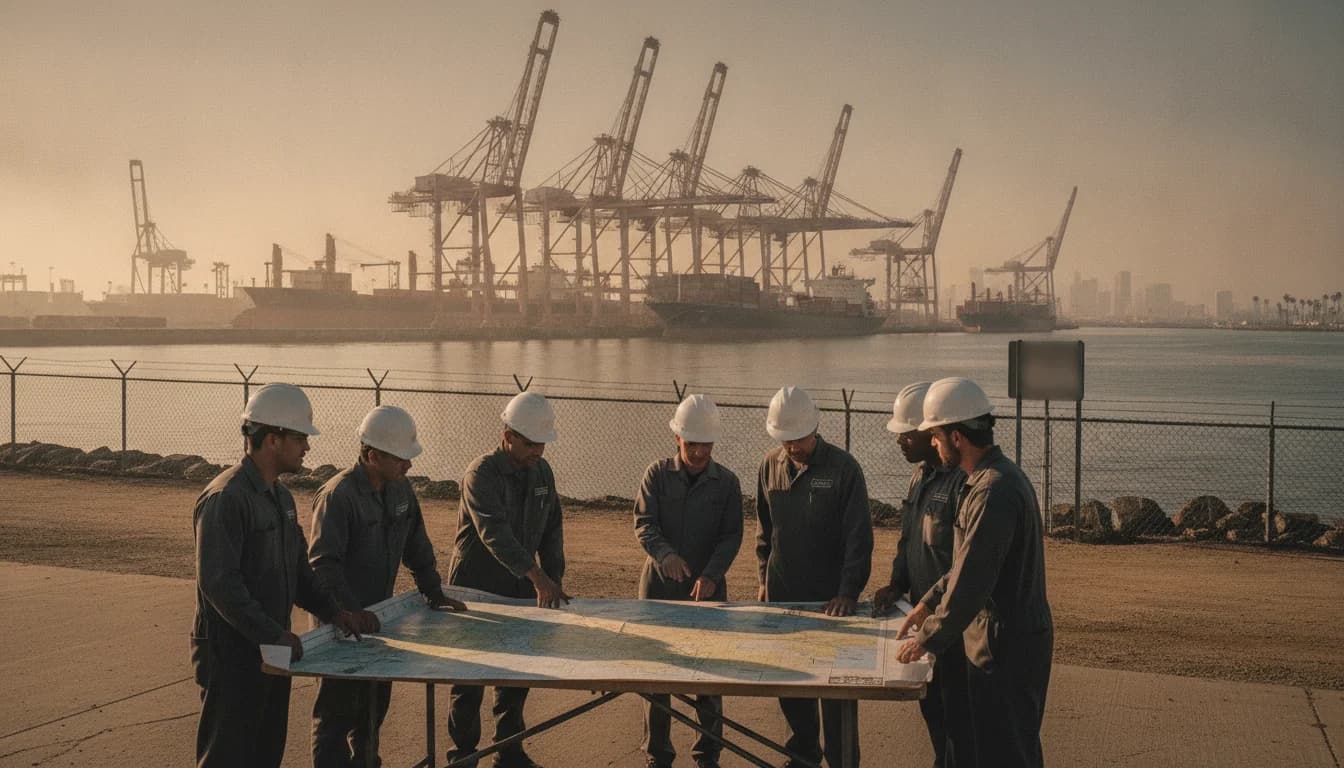
The Port of Long Beach is moving forward with a harbor development permit amendment process that stacks up against a wave of ongoing infrastructure work along Southern California’s waterfront. At issue are amendments to Level I Harbor Development Permits that govern site work, canopy installations, and subsurface investigations around key port properties. The May 11, 2026 meeting of the Port of Long Beach Board of Harbor Commissioners marked a notable moment in this process, with the board receiving and filing amendments to three Level I Harbor Development Permits and related activities that touch major port sites and near-term projects. This development comes as part of a broader, data-informed approach to updating harbor permits to reflect evolving project scopes, regulatory expectations, and environmental review requirements. The decisions outlined in the May 11 meeting agenda underscore the port’s operational emphasis on maintaining transparency, CEQA compliance, and prudent project governance as the harbor’s portfolio of infrastructure projects expands in scope and complexity. The actions also illustrate how permit amendments interact with ongoing environmental planning, engineering work, and agency oversight, all within a framework designed to minimize disruption to port operations and surrounding communities. The May 11 agenda, which documents the specific amendments and the CEQA determinations attached to each, is the primary source for these developments and sets the baseline for subsequent actions as projects move through the permitting lifecycle. (polb.granicus.com)
The central fact driving today’s coverage is straightforward: at its May 11, 2026 meeting in Long Beach, the Port of Long Beach Harbor Commission received and filed the First Amendment to Level I Harbor Development Permit 23-026 for site modifications at the City of Long Beach’s Multi Service Center (1301 & 1327 West 12th Street) and the First Amendment to Level I Harbor Development Permit 25-027 for Greenlane Infrastructure’s canopy structure installation at 1265 Harbor Avenue, along with a related amendment to HDP 25-058 for additional potholing work at Pier F as part of the Waterfront Seismic Improvement Project. This sequence of actions reflects the port’s structured CEQA approach and its ongoing coordination with the Environmental Planning division to maintain compliance while accelerating permissible work. The official agenda item detailing these amendments confirms the specific permit numbers, project sites, and the environmental determinations attached to each amendment. The May 11, 2026 Harbor Commission agenda is the primary public record for these actions. (polb.granicus.com)
One liftable fact from the May 11 agenda captures the essence of today’s development in a single, citable sentence: At its May 11, 2026 meeting, the Port of Long Beach Harbor Commission received and filed the First Amendment to Level I Harbor Development Permit 23-026 for site modifications at the Multi Service Center at 1301 & 1327 West 12th Street, Long Beach, CA 90813, and the First Amendment to Level I Harbor Development Permit 25-027 issued to Greenlane Infrastructure, LLC for a canopy structure installation at 1265 Harbor Avenue, Long Beach, CA 90813, according to the May 11, 2026 agenda. (polb.granicus.com)
This move sits within a broader framework of harbor permitting that emphasizes timely, compliant updates to project approvals while maintaining environmental safeguards. The underlying process, including the acceptance of amendments and the use of CEQA exemptions where applicable, is outlined in the port’s own planning and permitting procedures. The Harbor Commission agenda confirms that the amendments to HDP 23-026 and HDP 25-027 are framed as First Amendments and are supported by CEQA determinations that place these actions within existing facilities classifications (Class 1), and in some cases within the scope of minor changes (e.g., Class 3 or Class 4) as appropriate. This alignment with CEQA categories is a core component of how the port manages approvals for site work, canopies, and related infrastructure on port properties. (polb.granicus.com)
What Happened
Amendments to Harbor Development Permits
First Amendment to Level I Harbor Development Permit 23-026
- Scope and site: Modifications at the City of Long Beach’s Multi Service Center located at 1301 & 1327 West 12th Street, Long Beach, CA 90813. The environmental review determination associated with this amendment notes a CEQA exemption under State CEQA Guidelines Section 15301 (Existing Facilities, Class 1), Section 15302 (Replacement or Reconstruction, Class 2), and Section 15303 (New Construction or Conversion of Small Structures, Class 3). This reflects the amendment’s characterization as a modification to an existing facility rather than a new, standalone project. The May 11, 2026 agenda lists the item as a first amendment for consideration, with the Environmental Planning lead authoring the CEQA determination and site-specific documents referenced in the agenda materials. The inclusion of this amendment signals the port’s ongoing governance of the City’s site improvements within the harbor district’s procedural framework. (polb.granicus.com)
First Amendment to Level I Harbor Development Permit 25-027
- Scope and site: Greenlane Infrastructure, LLC’s canopy structure installation at 1265 Harbor Avenue, Long Beach, CA 90813. The CEQA determination associated with this amendment indicates exemptions under Section 15301 (Existing Facilities, Class 1), Section 15303 (New Construction or Conversion of Small Structures, Class 3), and Section 15304 (Minor Alterations to Land, Class 4). This reflects a canopy installation project that qualifies for the listed exemptions due to its scale and nature in an area already developed for harbor purposes. The May 11, 2026 agenda identifies this as a first amendment tied to HDP 25-027, reinforcing the port’s practice of aligning amendments with established environmental review categories. (polb.granicus.com)
First Amendment to Level I Harbor Development Permit 25-058
- Scope and site: Port of Long Beach work to conduct additional potholing activity as part of the geotechnical field investigation at Pier F for the Waterfront Seismic Improvement Project. The CEQA determination notes a categorical exemption under Section 15306 (Information Collection), which is typically applied to basic data gathering and field surveys necessary for understanding a project’s environmental setting. This amendment demonstrates how the port integrates geotechnical investigations into its broader Waterfront Seismic Improvement Program while maintaining CEQA compliance and project control. The agenda materials for the May 11, 2026 meeting list this as a first amendment to HDP 25-058, with Environmental Planning oversight. (polb.granicus.com)
Timeline and Context
The amendments were presented and listed as part of the Harbor Commission’s routine May 11, 2026 meeting, held at the Bob Foster Civic Chambers, 411 West Ocean Boulevard, Long Beach, CA. The meeting date and venue are documented in the published agenda, which also confirms the items under the “Consent Agenda” and “Regular Agenda” sections. This establishes May 11, 2026 as the official date of the amendments’ consideration in this public record. (polb.granicus.com)
The agenda page’s “Consent Agenda” section includes item HD-26-211 (First Amendment to Level I HDP 23-026) and item HD-26-212 (First Amendment to Level I HDP 25-027), along with HD-26-213 (First Amendment to Level I HDP 25-058). The clear listing of these amendments under the agenda’s consent items confirms that the board’s action on May 11, 2026 was to receive and file these amendments rather than to grant new authorizations or initiate a separate approval process on that day. The precise wording in the agenda confirms these were amendments intended to update existing permits rather than to authorize new construction in this stage. (polb.granicus.com)
The public record also shows that the May 11, 2026 meeting included the ongoing work of environmental planning and other port programs, including the “Green Truck Corridor” MOU with The Wonderful Company and Lincoln Transportation Services, which reflects a broader port strategy that intersects with permit activity. While not a direct amendment itself, this item provides context for the port’s broader climate, sustainability, and efficiency initiatives that can influence permit reviews and project timing. (polb.granicus.com)
Why It Matters
Impact on Permit Management and Project Delivery
The amendments documented in the May 11, 2026 Harbor Commission meeting reflect the port’s operational discipline in updating harbor-related permits to reflect evolving project details, site conditions, and compliance needs. By receiving and filing amendments rather than approving new contracts or issuing fresh CEQA determinations, the port signals a preference for updating existing authorizations to reflect practical changes on the ground, which can streamline project delivery while preserving environmental safeguards. This approach aligns with established harbor permit workflows that distinguish between Level I, Level II, and more comprehensive Harbor Development Permits, and it shows the port’s commitment to maintaining an auditable permit trail for port property work. (polb.granicus.com)
The amendments’ CEQA categorizations (e.g., Class 1 for existing facilities, Class 3 for minor construction, Class 4 for minor land alterations, and Class 6 for information collection) illustrate the port’s alignment with CEQA exemptions that apply to specific project scales and activities. This framework helps the port balance timely project execution with environmental accountability, a balance that is increasingly important as port infrastructure expands to accommodate growing trade volumes, decarbonization efforts, and seismic resilience work. The May 11 agenda’s CEQA language for each amendment provides a concrete, documentable basis for project proponents and oversight agencies to track the environmental review status of harbor work. (polb.granicus.com)
The amendments also reflect the Port of Long Beach’s broader strategy to integrate sustainability and efficiency into port operations. For example, the May 11 agenda includes HDP 26-232 (Memorandum of Understanding for a Green Truck Corridor), which demonstrates how harbor permitting interacts with programs intended to reduce emissions and improve logistics. While the HDP amendments themselves focus on site-level modifications, the surrounding programmatic context reveals a port-wide emphasis on technology-enabled, cleaner, and more efficient operations. This broader context matters for technology and market trends readers who track how port infrastructure evolves in response to regulatory and market pressures. (polb.granicus.com)
Regulatory and Community Context
The harbor permitting process is designed to coordinate with local, state, and federal agencies to ensure that harbor development aligns with environmental laws and local planning standards. The port’s permitting procedures emphasize that harbor structures attached to Long Beach waterways require coordination with the California Coastal Commission and other regulatory bodies, even as the port uses CEQA exemptions to streamline certain routine modifications. The Long Beach planning and coastal permitting guidance provides the procedural backdrop for how the public, developers, and port staff navigate the permitting lifecycle, from concept through approvals, amendments, and ongoing compliance. (longbeach.gov)
The public record shows ongoing harbor governance activity beyond the specific HDP amendments, including quarterly and special harbor commission meetings, updates to master plans, and amendments to other permits and licenses. The port’s use of its governance platform—Legistar/Granicus agendas and accompanying staff reports—offers transparency into how amendments are evaluated, what evidence is cited in support of CEQA determinations, and how amendments relate to larger port programs. The May 11, 2026 meeting serves as a concrete example of this governance approach in action. (polb.granicus.com)
Sectors and Stakeholders Affected
Port operations and nearby communities stand to be affected by harbor development permit amendments when site work, canopy installations, or potholing activities occur near public spaces, commercial districts, or residential areas. While the amendments themselves focus on specific sites (Multi Service Center, 1265 Harbor Avenue, Pier F), the broader pattern of permit updates can influence timelines for adjacent infrastructure, such as roadways, rail connections, and ventilation/emissions measures tied to port growth. Stakeholders include port tenants, local business communities, labor groups, environmental organizations, and residents who live near waterfront developments. The presence of the amendments in the public agenda and the CEQA determinations provide an accessible, public record of how these stakeholders can monitor and engage with permit changes. (polb.granicus.com)
The incorporation of environmental planning notes and CEQA classifications in the amendments demonstrates how environmental risk assessment and mitigation planning are integrated with project execution. This matters for developers and vendors seeking to work with the port, as CEQA exemptions (or requirements) can affect project timelines, cost, and risk management strategies. The May 11, 2026 agenda’s explicit CEQA references support this understanding and illustrate the port’s standard practice for aligning project modifications with environmental compliance expectations. (polb.granicus.com)
What’s Next
Next Steps for Permits and Projects
The May 11, 2026 agenda shows that the amendments were received and filed as part of the harbor commission’s routine processing. This indicates that no immediate new approvals were granted on that day for these amendments; rather, the amendments were acknowledged and placed into the permit records. The next steps for these specific amendments would typically involve the implementation of revised permit conditions, continued monitoring of site work under the amended permits, and potential future actions if the projects require further modifications or additional permits. The public record suggests that future Board actions could involve additional amendments, scope changes, or new permit considerations linked to the evolving needs of the port’s infrastructure program. (polb.granicus.com)
The port’s broader program of projects—such as the Pier B On-Dock Rail Support Facility Program and the Waterfront Seismic Improvement Project—may generate subsequent amendments or related approvals as field conditions change, design refinements are completed, or environmental monitoring results inform additional steps. The CEQA-based framing of these amendments, including the ability to issue further amendments within the scope of an Environmental Impact Report, provides a pathway for iterative updates while preserving environmental accountability. The public record includes a mid-body quote indicating that amendments may be considered as “subsequent approvals within the scope of the EIR” for related programs, underscoring the iterative nature of harbor development permitting. This framing is part of the port’s standard practice to manage complex, multi-year infrastructure programs in a dynamic regulatory and market environment. “This action is a subsequent approval within the scope of the Environmental Impact Report for the Pier B On-Dock Rail Support Facility Project,” as cited in the agenda language, illustrates how future amendments can be anchored to established environmental baselines. (polb.granicus.com)
Readers watching technology and market trends should note that permit amendments often reflect a shifting landscape of port modernization, decarbonization efforts, and resilience investments. The port’s own governance materials show ongoing attention to green transportation initiatives, such as the Green Truck Corridor MOU, which signals how permit actions can dovetail with broader environmental strategies and freight-system efficiencies. While HDP amendments themselves focus on site-specific changes, the surrounding program context—sustainability, electrification, and geotechnical investigations—will likely shape future permit activities, project sequencing, and the regulatory framework in which port technology initiatives operate. (polb.granicus.com)
Closing
The May 11, 2026 Harbor Commission meeting provides a clear snapshot of how the Port of Long Beach manages harbor development permits in a way that supports project momentum while preserving environmental and regulatory safeguards. By receiving and filing amendments to Level I HDPs for three distinct projects, the port demonstrates a disciplined approach to permit updates that can accommodate evolving site conditions, project scopes, and technical requirements. For readers who follow technology and market trends, these permit amendments are a signpost: behind the scenes, port authorities are refining the permitting infrastructure that enables major infrastructure upgrades, decarbonization efforts, and seismic resilience work that will shape the port’s operations for years to come. As projects advance, stakeholders and observers can stay informed through the port’s public meeting agendas and associated documents, which provide a transparent, live record of how harbor development progresses in a rapidly changing logistics landscape.
To stay updated, monitor the Port of Long Beach’s Harbor Commission agenda pages and related staff reports, which provide current information on permit amendments, project milestones, and environmental compliance status. The May 11, 2026 meeting materials are a prime public artifact for understanding the precise amendments, their CEQA bases, and their place within the port’s broader programmatic framework. As the harbor continues to evolve, the port’s publicly accessible records will remain a critical source for data-driven readers seeking to understand how technology-driven market trends intersect with harbor permitting and infrastructure development. (polb.granicus.com)
About the author
Los Angeles Monday
Content writer for Los Angeles Monday