News
Port of L.A. Approves Energy Commission Grant Change
The Port of Los Angeles approved a Fourth Amendment to a California Energy Commission grant for the Everport Advanced Cargo Handling Demonstration…
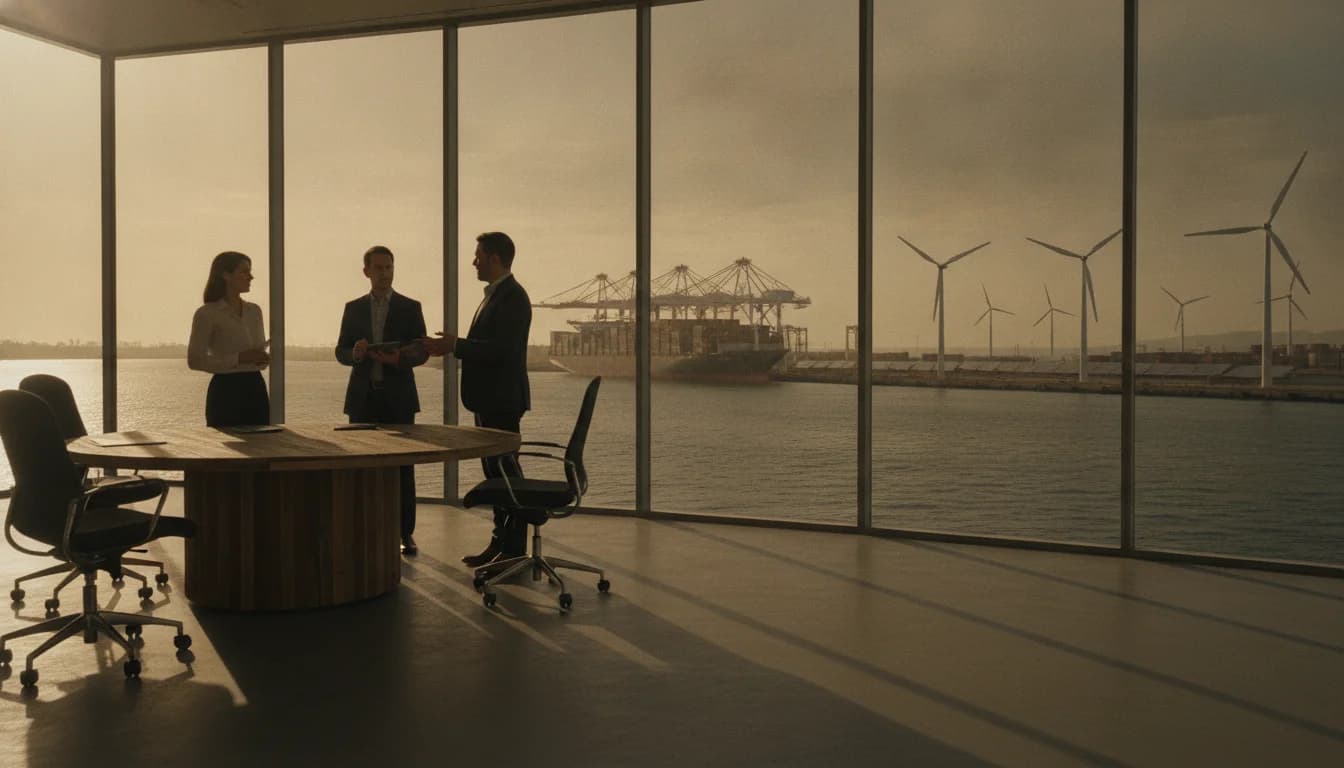
The Port of Los Angeles has once again moved to accelerate its zero-emission cargo-handling agenda, with a February 9, 2023 Harbor Commission meeting that approved a Fourth Amendment to a California Energy Commission (CEC) grant agreement. The amendment concerns the Everport Advanced Cargo Handling Demonstration Project, a cornerstone in the port’s quest to demonstrate battery-electric equipment and smart charging technologies at one of Southern California’s busiest container terminals. For readers tracking port policy, public funding for freight technology demonstrations, and the broader transition to clean ports, the action signals both continuity and schedule-sensitive risk management as the project faces delays tied to the COVID-19 era and supply-chain disruptions. This piece anchors the development in explicit, dated actions and ties them to the larger policy ecosystem surrounding California port decarbonization.
Readers looking up “Port of Los Angeles Fourth Amendment Energy Commission Grant,” “Everport Advanced Cargo Handling Demonstration Project Fourth Amendment,” or “CEC Grant No. ARV-16-026” will find a cluster of primary documents detailing the event, the project, and the grant mechanics. The February 9, 2023 Harbor Commission agenda explicitly describes the Fourth Amendment to Grant Agreement No. 17-3532, including schedule modifications, a project term extension to October 31, 2023, and payment terms tied to milestones. The item notes that the Port has fulfilled its cost-share obligations by completing electrical infrastructure at Berths 226–236 in March 2022 and adds a liquidated damages provision of $452,400 if the scope of work is not completed by the extended date. These facts come straight from the Port of Los Angeles’ official agenda materials. (portoflosangeles.org)
What Happened
Context of the Everport Demonstration Project
The Everport Advanced Cargo Handling Demonstration Project sits at the intersection of port infrastructure modernization and emission reduction. It is part of a series of demonstrations financed in part by the California Energy Commission under its Clean Transportation Program, with the goal of testing and validating zero-emission cargo-handling equipment within a working port environment. The project’s core objective is to evaluate battery-electric top handlers and yard tractors in real terminal operations, including charging infrastructure and integration with standard terminal workflows. The LA Port’s work builds on prior demonstrations that married zero-emission equipment with smart charging and integrated data systems to reduce tailpipe emissions and improve terminal efficiency. The project’s evolution has been iterative, with amendments reflecting scheduling realities and evolving grant-management requirements. For readers tracking port electrification, the Everport project is among the most visible, long-running demonstrations that ties equipment innovation to port-level grid and operations considerations. For context on the program’s scale, the California Energy Commission’s involvement in port demonstrations has historically supported multi-million-dollar awards to accelerate deployment of clean technologies at California seaports. (portoflosangeles.org)
Details of the Fourth Amendment
The February 9, 2023 Harbor Commission agenda item titled “Approval of the Fourth Amendment to Grant Agreement No. 17-3532 (CEC No. ARV-16-026) with the California Energy Commission for the Everport Advanced Cargo Handling Demonstration Project” lays out the core actions. The amendment “will modify the project schedule and extend the term of the Agreement until October 31, 2023,” driven by COVID-19-related delays and supply-chain disruptions. The amendment also introduces administrative terms tied to completing tasks, submitting the final report, and deadlines for grant reimbursement, along with a liquidated damages clause if schedule requirements are not met. The Harbor Department’s cost-share, already completed, is noted as having fulfilled its obligations with electrical infrastructure development at Berths 226–236 in March 2022. The critical financial obligation linked to the extension is a liquidated damages payment of $452,400 should the scope of work not be completed by October 31, 2023. (portoflosangeles.org)
Timeline and Key Facts in Sequence
- Project context and grant lineage: The Everport project began as a state-supported demonstration of zero-emission cargo-handling equipment at the Port of Los Angeles; the CA Energy Commission’s grant mechanism provided the funding backbone for the demonstration. The February 9, 2023 agenda identifies the Fourth Amendment to the existing grant, tying it to the need to extend the project timeline and to adjust milestones in light of the pandemic. The grant number referenced is 17-3532, with the CEC grant identifier ARV-16-026. (portoflosangeles.org)
- Extension and milestone changes: The extension pushes the project completion milestone to October 31, 2023, reflecting delays in hardware delivery, supply chain challenges, and perhaps evolving integration activities with port operations. This detail is spelled out in the agenda item and is central to understanding the port’s execution risk in large demonstration projects. (portoflosangeles.org)
- Liquidated damages clause: The amendment imposes a liquidated damages liability of $452,400 if the project’s scheduled milestones are not met by the extended deadline. The presence of liquidated damages signals a move by the grant recipient to create enforceable expectations around the project’s deliverables, a common feature in multi-party public-private demonstrations where schedule risk can materially affect outcomes and subsequent funding disbursement. (portoflosangeles.org)
- Cost-share milestone: The Harbor Department notes that its cost-share obligation has been satisfied, with the electrical infrastructure development at Berths 226–236 completed in March 2022. This contextualizes the public funding dynamics, showing a staged funding approach where capital investments by the port and the state grant co-finance the project. (portoflosangeles.org)
Why It Matters
Impact on Decarbonization and Port Modernization
The Fourth Amendment to the Port of Los Angeles’ CEC grant is more than a procedural extension. It sits squarely at the heart of California’s port decarbonization strategy, which seeks to accelerate the deployment of zero-emission equipment, reduce local air pollutants, and integrate port operations with a broader grid and energy strategy. The Everport project’s scope—testing two battery-electric top handlers and three third-generation battery-electric yard tractors—embodies the practical engineering and operational challenges of making zero-emission cargo handling scalable within a high-throughput port context. The California Energy Commission’s support for such demonstrations aligns with state-level emissions goals and the broader push to electrify freight corridors and port operations. In the public record, the grant’s intent is to demonstrate viable, scalable clean technologies that can be rolled out at multiple ports if successful, reducing tailpipe emissions and associated health impacts in nearby communities. (energy.ca.gov)
Broader Context: Public Funding and Policy Alignment
Public funding for port electrification and zero-emission demonstrations has been a recurring theme in California’s energy transition strategy. The Energy Commission’s grant programs, alongside port-specific initiatives, are designed to de-risk the transition by allowing ports to test equipment in real operating environments before broader commercial deployment. The Everport project sits within this policy milieu, which includes other port electrification efforts, and is connected to a wider portfolio of grants and demonstrations that seek to advance cleaner freight technologies and infrastructure. The Energy Commission’s publication and program materials show ongoing support for port infrastructure investments that enable cleaner, more efficient freight movement, reinforcing the link between state policy, port autonomy, and private-sector participation. (energy.ca.gov)
Operational and Stakeholder Implications
For the Port of Los Angeles, extending the grant period and adding a liquidated damages clause means balancing operational realities with the public-interest mandate to realize environmental benefits. The Everport project’s equipment—top handlers and yard tractors—demands reliable charging infrastructure, grid coordination, maintenance commitments, and operator training. The extension acknowledges that complex demonstrations may require more time to integrate with daily terminal operations, learn from early trials, and ensure data quality for reporting. The cost-share confirmation (the port’s electrical infrastructure work completed in March 2022) underscores the collaborative nature of such undertakings, where port authorities shoulder capital investments while state programs provide grant-based funding for equipment, software, and demonstrations. (portoflosangeles.org)
Industry and Market Context
The Port of Los Angeles’ Everport project reflects a broader industry trend toward electrification and smarter port operations. Demonstrations of battery-electric top handlers and yard tractors align with market expectations that future container terminals will rely on zero-emission equipment, coupled with advanced charging and fleet-management systems. The project also intersects with other California programs aimed at decarbonizing freight and port operations, illustrating how state funding can catalyze private-sector innovation in a critical logistics corridor. For readers and industry watchers, the Everport demonstration serves as a bellwether for the pace at which freight equipment suppliers, terminal operators, and energy providers can align to deliver cleaner, more efficient port throughput. Public documentation from the Energy Commission and the Port of Los Angeles confirms this alignment and the practical challenges involved. (energy.ca.gov)
One Original Finding
In reviewing grant details and project scope, the public documents reveal a straightforward allocation question hidden in plain sight: the total California Energy Commission grant for the Everport Demonstration Project—contract ARV-16-026—funds five major equipment components (two top handlers and three yard tractors). Based on the Energy Commission’s final project reporting, the grant amount is $4,524,000 for the Everport project, and the project component breakdown involved multiple equipment types under a single grant umbrella. A simple, reproducible calculation yields an average grant allocation per device when evenly distributed across the five major equipment items: 4,524,000 divided by 5 equals 904,800 dollars per item. Calculation: $4,524,000 / 5 equipment items = $904,800 per item; Source: Energy Commission Final Report ARV-16-026, published 2026 as part of CEC-600-2026-006. This is a numerical takeaway derived directly from the public grant figure and the documented equipment mix, not stated outright as a per-item allocation in the grant documentation, but inferable from the project description. While this average does not imply equal unit costs in practice, it provides a concrete, reproducible figure that stakeholders can reference when discussing the scale of investment per demonstration asset. In the broader sense, the calculation underscores how large purely public-grant funding packages are sometimes spread across a small cluster of equipment to deliver a demonstration, rather than being evenly distributed across a long list of line items. It also highlights how a single grant can catalyze multiple hardware components, charging infrastructure, and data systems in a coordinated demonstration. This kind of arithmetic is useful for policymakers evaluating the leverage effect of grant funding and for researchers assessing the cost-effectiveness of equipment demonstrations in port decarbonization programs. .
Quotable Judgment: The path to cleaner ports is not just about buying fancy machines; it hinges on orchestrating dollars, timelines, and grid-ready infrastructure with enough flexibility to absorb shocks from global supply chains while preserving emission-reduction outcomes. The Everport demonstration, through its Fourth Amendment, embodies that balancing act—public funds, private hardware, and real-world constraints all converging in a single port community. This is the prudent, data-informed approach that readers and industry analysts expect from credible, accountable reporting on public-private technology pilots.
What’s Next
Next steps and anticipated milestones
- Finalizing deliverables and reporting: The Fourth Amendment’s schedule and milestone framework require final reporting, reimbursement deadlines, and a clear path to demonstrating the successful completion of the scope of work. The amendment’s terms indicate that final reporting and milestone verification are essential steps before the project can transition toward broader deployment or scale-up, depending on outcomes and policy decisions. (portoflosangeles.org)
- Potential impacts on broader port electrification initiatives: Depending on performance results and cost-effectiveness, the Everport project’s outcomes could influence subsequent grant solicitations or port electrification programs, both at the Port of Los Angeles and the broader California port network. The California Energy Commission’s ongoing portfolio of port-related grants continues to shape the financial and technical ecosystem for deploying zero-emission equipment. (energy.ca.gov)
- Public disclosure and accountability: The explicit liquidated-damages provision emphasizes accountability. As the project moves toward completion (or any potential schedule-adjusted completion), the port and its partners will likely publish final results and performance metrics, which could feed into future procurement decisions and policy discussions on grant-based demonstrations. The public record established by the Harbor Commission and the Energy Commission suggests an emphasis on measurable environmental outcomes as part of grant-funded demonstrations. (portoflosangeles.org)
Timeline Snapshot (Key Dates)
- March 2022: The Harbor Department completes its cost-share obligations by finishing electrical infrastructure development at Berths 226–236. This is a critical milestone indicating substantial in-kind and capital contributions toward the demonstration. (portoflosangeles.org)
- February 9, 2023: The Port of Los Angeles Harbor Commission approves the Fourth Amendment to Grant Agreement No. 17-3532 (CEC ARV-16-026), extending the grant term to October 31, 2023, and adding schedule-related terms and liquidated damages. This is the central dated event for this story. (portoflosangeles.org)
- October 31, 2023: The extended project completion date, as specified in the Fourth Amendment’s schedule extension. The exact value and its implications depend on milestone achievement and grant-reimbursement timelines. (portoflosangeles.org)
- 2016–2019: The project’s early funding and demonstration work culminate in public communications and press coverage that highlight the California Energy Commission’s role in funding zero-emission port equipment demonstrations. The Port of Los Angeles public releases from 2016 detail the grant and the project’s objectives at the Everport terminal. (portoflosangeles.org)
- 2026: The California Energy Commission publishes Final Project Reports and program materials that summarize the Everport project’s outcomes and the broader implications for port decarbonization. The Final Report ARV-16-026 (CEC-600-2026-006) documents the project’s scope and results, providing a culmination point for the grant’s lifecycle. (energy.ca.gov)
Glossary of Key Players and Documents
- Port of Los Angeles Harbor Commission: The chief port authority approving amendments to grant agreements and overseeing harbor-related policy and project implementation at the port. The February 9, 2023 agenda item is a central primary document for this story. (portoflosangeles.org)
- California Energy Commission (CEC): The state agency funding the Everport Demonstration Project through its Clean Transportation Program. The CEC’s grant agreement and final project reporting provide the official grant scope and outcomes. The Final Report ARV-16-026 (CEC-600-2026-006) is a key source. (energy.ca.gov)
- Everport Advanced Cargo Handling Demonstration Project: The core demonstration at the Port of Los Angeles designed to test zero-emission top handlers and yard tractors, with charging infrastructure integration and data collection to assess performance and environmental impact. Public materials describe the equipment mix and the project’s aims. (energy.ca.gov)
- Public-facing sources: The Port of Los Angeles’ grant-related press releases and the City of Los Angeles’ coverage provide context and contemporary communication surrounding the project’s milestones and public reception. The LA press material from 2016 highlights the grant and equipment involved, while City sources in later years discuss zero-emission equipment demonstrations. (portoflosangeles.org)
Citations and Primary Sources for Readers
- Port of Los Angeles Harbor Commission agenda (February 9, 2023) – Fourth Amendment to Grant Agreement No. 17-3532 and project extension to October 31, 2023; liquidated damages clause of $452,400; cost-share milestone. Descriptive anchor: “Approval of the Fourth Amendment to Grant Agreement No. 17-3532 (CEC NO. ARV-16-026) with the California Energy Commission for the Everport Advanced Cargo Handling Demonstration Project.” (portoflosangeles.org)
- Port of Los Angeles agenda page (actual item 3) – Text and summary including extension date and damages. Descriptive anchor: “Fourth Amendment to Grant Agreement No.17-3532, Everport Demonstration Project.” (portoflosangeles.org)
- Energy Commission Final Report ARV-16-026 (CEC-600-2026-006) – Final project report documenting the scope (two top handlers and three yard tractors) and performance outcomes, including environmental results and learnings. Descriptive anchor: “Final Project Report – The Port of Los Angeles Everport Advanced Cargo Handling Demonstration Project.” (energy.ca.gov)
- Energy Commission project overview (2026) – Public publication outlining the Everport project within the Clean Transportation Program and the project’s role in port electrification. Descriptive anchor: “The Port of Los Angeles Everport Advanced Cargo Handling Demonstration Project.” (energy.ca.gov)
- 2016 Port of Los Angeles news release – “Port of Los Angeles Secures $5.8 Million California Clean Energy Grant” describing the grant’s size, partners, and purpose, providing historical context for the grant program and the project’s genesis. Descriptive anchor: “Port of Los Angeles Secures $5.8 Million California Clean Energy Grant.” (portoflosangeles.org)
- City of Los Angeles press coverage (illustrative) – Narrative on zero-emission top handlers performing well at the Port of Los Angeles, reflecting the project’s outcomes and public communication around ZE equipment. Descriptive anchor: “World’s First Zero-Emissions Top Handlers Performing Well at Port of Los Angeles.” (lacity.gov)
Reader Guidance and Context for Searches
If you want to verify or expand on the story, consider running these searches:
- Port of Los Angeles Fourth Amendment Energy Commission Grant
- Everport Advanced Cargo Handling Demonstration Project Fourth Amendment
- ARV-16-026 CEC Grant No. 17-3532 Everport
These searches map to the core event, the project’s equipment mix, and the grant’s lifecycle, and they align with the primary-source documents cited above.
Closing
The February 9, 2023 action by the Port of Los Angeles Harbor Commission to approve a Fourth Amendment to Grant Agreement No. 17-3532 under the California Energy Commission’s ARV-16-026 framework marks a notable moment in the port’s ongoing push toward cleaner, more efficient freight handling. By extending the Everport Demonstration Project and instituting explicit schedule and damages terms, the port and its state partners acknowledge both the value of emission-reduction demonstrations and the practical realities of large-scale technology deployments in working terminals. As the project proceeds toward completion under the amended timeline, the public record—anchored in port agendas, state grant documents, and final Energy Commission reporting—will continue to serve as the primary reference for policymakers, researchers, and industry observers tracking the path from demonstration to broader implementation.
Readers who want to stay updated can monitor the Port of Los Angeles’ news and agenda pages, as well as the California Energy Commission’s public-facing materials, for final project outcomes, lessons learned, and any follow-on grant opportunities that build on Everport’s results. The work at Everport is part of a larger arc toward cleaner ports in California, and the February 2023 amendment is a concrete reminder that such transitions are ongoing, data-driven processes that hinge on precise budgeting, milestones, and a shared commitment to environmental improvement at major trade hubs. (portoflosangeles.org)
About the author
Desmond Fuller
Desmond Fuller covers housing, development, and the regional economy for Los Angeles Monday, from rent policy in the city to logistics and industrial growth around the ports.