News
Sepulveda Transit Corridor: Board Approves Contract
Explore the data-driven analysis of the Sepulveda Transit Corridor contract approval, its potential implications, and future impact on transit systems.
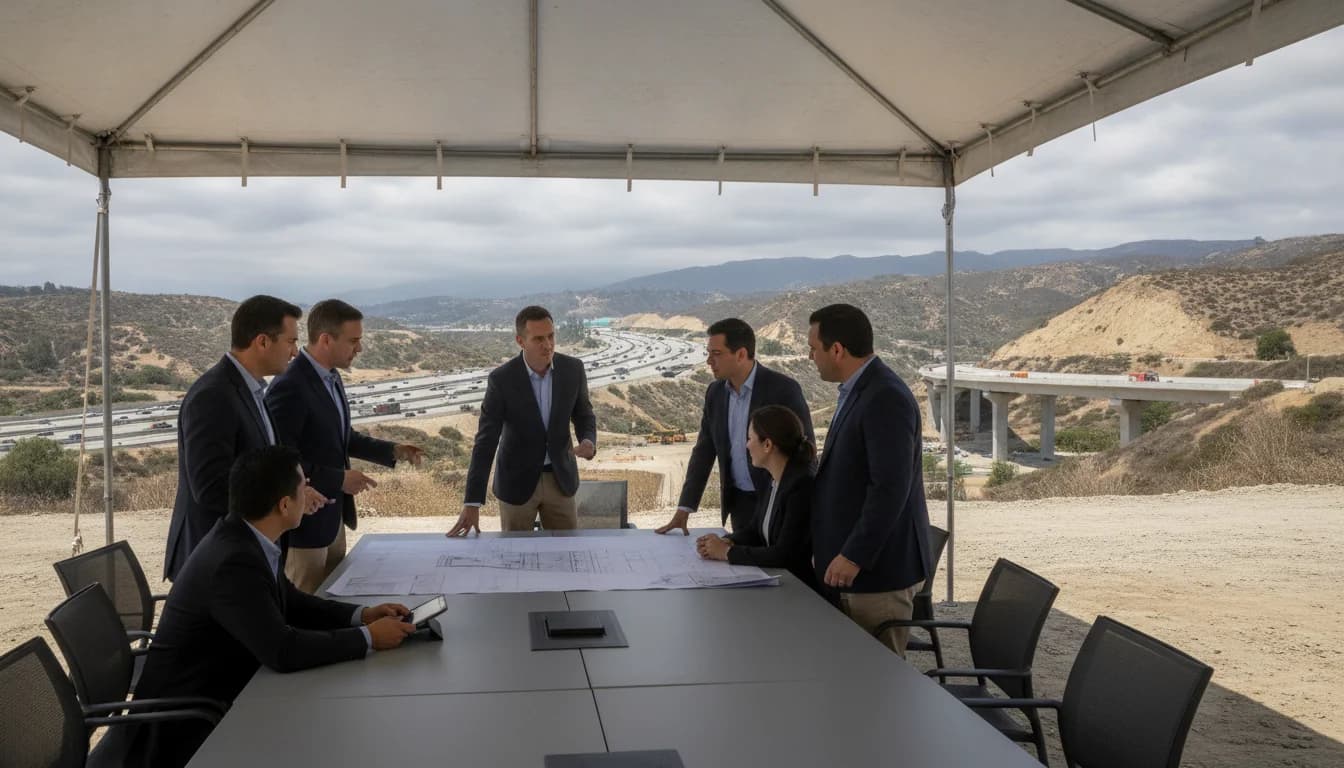
In Los Angeles, a pivotal step forward for the Sepulveda Transit Corridor was achieved when the LA Metro Board moved to approve a contract modification on May 28, 2026. The decision, made during a Regular Board Meeting in the city, signals continued momentum behind one of Southern California’s most consequential transportation initiatives. Project leaders emphasize that the modification aligns procurement with updated design and scheduling needs as the agency advances environmental review and pre-construction work. This development matters not only for the corridor’s timeline but also for how metro agencies plan large-scale, underground rail projects in complex urban geographies. As LA Metro frames it, the Sepulveda Transit Corridor is poised to reshape travel patterns, reduce congestion on the 405, and connect key regional destinations through a high-capacity, underground rail network. The information above reflects the board’s action and accompanying documentation released in late May 2026. (boardagendas.metro.net)
On May 28, 2026, the Los Angeles County Metropolitan Transportation Authority Board approved an increase in the project’s CMA from $8,495,350 to $10,410,059, a rise of $1,914,709, according to Board Report 2026-0250. This single, documented figure captures a moment of fiscal recalibration for the Sepulveda Transit Corridor as the agency expands scope for predevelopment work and contract modifications tied to the project’s underground alignment. The CMA adjustment appears in the board report and related procurement documents, underscoring the ongoing negotiation between design ambition, environmental processes, and budgetary discipline. (boardagendas.metro.net)
The news follows a broader, high-profile path: in January 2026, Metro’s board selected the Locally Preferred Alternative for the Sepulveda Transit Corridor, opting for a fully underground heavy-rail route between the Van Nuys Metrolink Station and the Expo/Sepulveda station on the Westside, with a UCLA campus stop and seamless connections to the G Line and other networks. That January decision marked a major milestone by narrowing the options and signaling a concrete path to environmental review and financing. Metro has positioned Modified Alternative 5 as the LPA, building on elements from previously studied variants and emphasizing a single-bore tunnel, higher capacity, and faster peak-time frequencies. The official project page and Metro’s internal communications describe the transition from study to a more defined design and execution strategy, including potential private-sector involvement through partnerships as the project progresses. (metro.net)
The choice of an underground heavy-rail path through the Sepulveda Pass has generated both support and caution. Supporters highlight the potential to deliver end-to-end travel times on the order of 20 minutes between the Valley and the Westside, while avoiding the surface disruption and environmental risks initially associated with other alignment concepts. The Source, a Metro-affiliated news outlet, described the LPA as delivering a fully underground heavy-rail subway with a design that prioritizes a direct Van Nuys to Westwood corridor and UCLA access, while minimizing surface impacts. The piece also notes a preliminary cost framework and the ongoing need to secure federal, state, and local funding, including potential public-private financing. As with many megaprojects, community feedback spans concerns about cost, construction impacts, and long-term maintenance, all of which Metro indicates it will address through phased planning and continued public engagement. (thesource.metro.net)
Section 1: What Happened
The May 28, 2026 Contract Approval and Its Context
The Metro Board’s May 28, 2026 decision was recorded as “Contract Approved” in the official board report for the Sepulveda Transit Corridor. The action followed an agenda where procurement items and change orders were under review, with the meeting documented as part of the Regular Board Meeting process. The associated materials include seven attachments, such as procurement summaries and change-order logs, which provide granular detail on the contracting pathway and incremental modifications. This action is part of a broader sequence of board-level approvals aimed at advancing the project’s predevelopment and design refinement activities. The May 28 action is situated within a lifecycle that includes planning committee steps and subsequent board ratification, reflecting Metro’s approach to large-scale rail projects where procurement, environmental review, and design iterations occur in parallel as funding is assembled. For readers seeking primary documents, the official board report is linked in the city’s Metro agenda archives. (boardagendas.metro.net)
The May 28, 2026 CMA modification cited above is part of a broader administrative process in which the CMA (Contract Management Authority) authority is adjusted to accommodate evolving design and construction needs. The specific CMA increase—$1,914,709—from $8,495,350 to $10,410,059 is disclosed in the same board report, along with the reasoning for the modification and its potential implications for project scheduling and scope. In practical terms, this adjustment reflects how Metro balances scope changes, supplier performance, and redesigns that arise as work shifts from concept to engineering. The document trail includes detailed attachments (A through C) and a presentation, all accessible from the board report page. (boardagendas.metro.net)
The LPA decision, reached in January 2026, is the most consequential design milestone preceding the CMA adjustment. Metro’s own communications and the project blog documented that the Locally Preferred Alternative selected Modified Alternative 5—an underground heavy-rail concept with a single-bore tunnel and targeted stations—would guide environmental work and future financing. This choice, as explained by Metro staff and The Source, sets the mechanical and civil framework for the corridor’s long-term construction. The January 2026 LPA decision is echoed in the Sepulveda Transit Corridor project page, which emphasizes the LPA’s role in narrowing alternatives and moving toward a refined design. (thesource.metro.net)
A note on the magnitude of planning and cost discussion: the project’s early cost bands, as discussed in 2025–2026 coverage, place preliminary estimates in the tens of billions of dollars, with later updates indicating a refined but still substantial price tag. The Metro blog coverage and the Los Angeles Times reporting reflect the shift from a broad, aspirational plan to a more concrete but still budget-sensitive design. The LA Times article from January 2026 highlights the underground heavy-rail option’s approval while emphasizing the broader challenge of funding, which remains a defining factor in whether and when construction proceeds. Readers should view the cost figures as evolving with design refinements and financing strategies. (latimes.com)
The Project Scope in Public Documents
The Sepulveda Transit Corridor is described by Metro as a high-capacity rail line intended to connect the San Fernando Valley and the Westside, with eventual access to LAX and broader regional integration. The official project page positions the corridor as a critical north-south connection in a congested corridor, with planning currently in the environmental review and design refinement phase. The page also highlights a “fact sheet” and a project hub with maps and documentation, pointing readers to primary materials for the environmental process and technical specifications. This official framing is essential for readers who want to track official project milestones and methodological changes as the corridor advances through the CEQA/NEPA processes. (metro.net)
A separate primary source, the Metro board report 2026-0250, provides a transparent ledger of the procurement changes, including the CMA modification and the attachments that document the rationale for the adjustment, such as DEOD (Design, Engineering, Operations and Delivery) summaries. The presence of a dedicated Modification Change Order Log (Attachment B-1, B-2) and a detailed Procurement Summary (Attachments A-1 and A-2) demonstrates how Metro is tying high-level policy decisions to auditable, itemized contracting steps. For researchers and readers who want to verify the exact values and procedure, these attachments are included in the board report archive. (boardagendas.metro.net)
The LPA decision and the subsequent environmental planning work are described by Metro’s The Source blog, which outlines the features of Modified Alternative 5—namely, a single-bore tunnel, rapid train frequencies, and city-center alignment considerations. The post also discusses a phased approach to construction (Initial Operating Segment) and the ongoing environmental review, which will inform the next phases of design and financing. This piece, while published on a Metro-affiliated platform, remains a primary source for understanding internal decision-making and communication with the public. (thesource.metro.net)
Section 2: Why It Matters
Regional Mobility and Travel Times
The core justification for the Sepulveda Transit Corridor remains its potential to provide a fast, reliable alternative to driving through one of Southern California’s most congested corridors. The LPA is framed as delivering significantly shorter trip times between the Valley and West Los Angeles compared with car travel on the 405 corridor, which is frequently constrained by traffic and incidents. The Source notes a 20-minute end-to-end trip expectation for the underground heavy-rail alignment, while the Metro project page emphasizes the goal of rapid regional connectivity and improved access to major destinations, including UCLA. The authority’s public statements stress that a shorter travel time is central to shifting mode choice away from driving toward transit, a trend supported by urban mobility research that prioritizes high-capacity rail in dense corridors. The Times coverage and Metro communications together illustrate the alignment’s potential to transform regional commuting patterns if financing and delivery meet expectations. (thesource.metro.net)
The board’s May 2026 CMA adjustment is a reminder that even as a preferred design converges, cost pressures and scope development can influence schedule and risk. In a large, underground project, cost growth is a common phenomenon as design details mature, environmental constraints tighten, and construction methodologies become more cost-intensive. Metro’s published CMA increase—though modest in absolute terms relative to the overall project scale—highlights the ongoing need for rigorous cost management, public accountability, and iterative financing plans to ensure that the project remains feasible within regional transportation funding envelopes. The public record shows that the CMA amendment was a targeted modification to reflect updated procurement and DEOD considerations, rather than a wholesale recalibration of the project’s budget. (boardagendas.metro.net)
Funding Realities and Market Context
Metro’s ongoing engagement with multiple funding streams—Measure M proceeds, potential federal and state support, and private financing through public-private partnerships—reflects a broader market trend in megaproject delivery. The LA Times coverage and The Source discussion both describe the funding complexities inherent in a multi-decade project with a multi-billion-dollar price tag. Analysts and officials emphasize the need to align environmental approvals, design progress, and political will to secure a robust funding package. This is a familiar pattern for major transit expansions in large, dynamic regions where revenue volatility and political cycles can influence the pace of construction. (latimes.com)
The project’s pacing is also shaped by the evolving role of private-sector participation. The Meridiam press release in January 2026 underscores a collaboration among private partners (STCP: Sepulveda Transit Corridor Partners) and signals a willingness to explore financing models that blend public funding with private capital and long-term operations expertise. While the public record stops short of a single financing plan, the public-facing materials consistently frame P3 approaches as a potential enabler for timely delivery, risk sharing, and value engineering. This reflects a broader market trend in which large rail projects increasingly consider hybrid delivery models to overcome funding gaps and accelerate construction timelines. (meridiam.com)
Stakeholder Impacts and Public Dialogue
- For communities along the corridor, the move toward a fully underground heavy-rail design addresses a range of local concerns, from surface disruptions and noise to environmental risk management. Metro’s FAQs and the project hub emphasize ongoing public input and the intention to refine design elements to reduce surface impacts while maintaining high-capacity performance. The LPA’s emphasis on a single-bore tunnel and direct G Line interface signals a design intent to minimize daily construction disturbances in neighborhoods and to improve long-term reliability for riders. Local stakeholders—from neighborhood associations to UCLA and Westside advocate groups—will continue to watch for updates on phasing, station placement, and project milestones as the environmental review advances. (metro.net)
Section 3: What’s Next
Design Refinement, Environmental Review, and Financing Strategy
With the LPA in place, Metro indicates it will intensify design refinements and value-engineering opportunities, while continuing environmental review under CEQA/NEPA frameworks. The Source’s coverage of the January 2026 LPA decision highlights the agency’s plan to move from concept to engineering detail, with attention to phasing that allows early rider benefits through an Initial Operating Segment. The Metro page reiterates that the IOS would connect the G Line in Van Nuys to the D Line on the Westside, enabling more direct transfers and faster overall travel times for the corridor. This phased approach is designed to balance the desire for rapid rider benefits with the realities of funding and construction risk. (thesource.metro.net)
The environmental review process will continue in parallel with design work, and Metro plans to pursue value-engineering opportunities that could reduce costs or streamline construction without compromising performance. The project hub and fact sheets provide ongoing access to updated schematics, station concepts, and alignment maps, which readers can examine to understand how the LPA translates into physical infrastructure and station footprints. The public-facing materials emphasize continued engagement and opportunities for input as plans advance, a hallmark of Metro’s community-centered approach to large-scale capital programs. (metro.net)
What to Watch For
- Next milestones include formal environmental documentation updates, revised cost estimates as design progresses, and potential updates to funding strategies as federal and state programs evolve. Metro’s board and planning committees are expected to release further updates on phasing, funding, and procurement timelines, including any upcoming solicitations or partnerships related to the IOS and future extensions. Observers should watch for:
- Updated cost forecasts and funding commitments from federal, state, local sources
- Public hearings and environmental impact statements that detail potential route refinements
- Procurement notices and modification orders tied to predevelopment work
- Any shift in schedule tied to financing or regulatory approvals
Closing
This week’s contract modification and the January LPA decision together mark a decisive inflection point in the Sepulveda Transit Corridor’s trajectory. Metro’s public documentation shows a path that prioritizes underground heavy rail, faster regional mobility, and a phased delivery plan that seeks to balance engineering complexity with budget realities. As the agency continues environmental review, design refinement, and partner negotiations, readers—riders, neighbors, and local leaders—will want to stay closely informed about funding breakthroughs, public input opportunities, and the evolving assumptions behind cost and schedule. The Sepulveda Transit Corridor remains a landmark regional project, with the potential to reshape how Los Angeles moves across one of its busiest corridors if financing and delivery keep pace with technical ambition.
Stay tuned to Metro’s official pages for project updates, including the Sepulveda Corridor hub, the project’s fact sheets, and the latest board filings. For broader context and independent coverage, readers can consult the Los Angeles Times reporting on the corridor’s early-2026 direction and the Metro’s own communications about the LPA and the contract changes that follow. The combination of formal board actions, public-facing technical documentation, and ongoing media coverage provides a clear, citable record of a complex, evolving transportation initiative that will influence regional mobility for decades.
About the author
Priya Raghunathan
Priya Raghunathan writes about culture and sport for Los Angeles Monday: film and music, the restaurants feeding the city, and the teams and venues carrying it through the week.