News
Court Halts Expansion of World Oil Terminals Project
A Los Angeles County Superior Court has ordered a pause on the World Oil Terminals project expansion at the Port of Long Beach, requiring a revised…
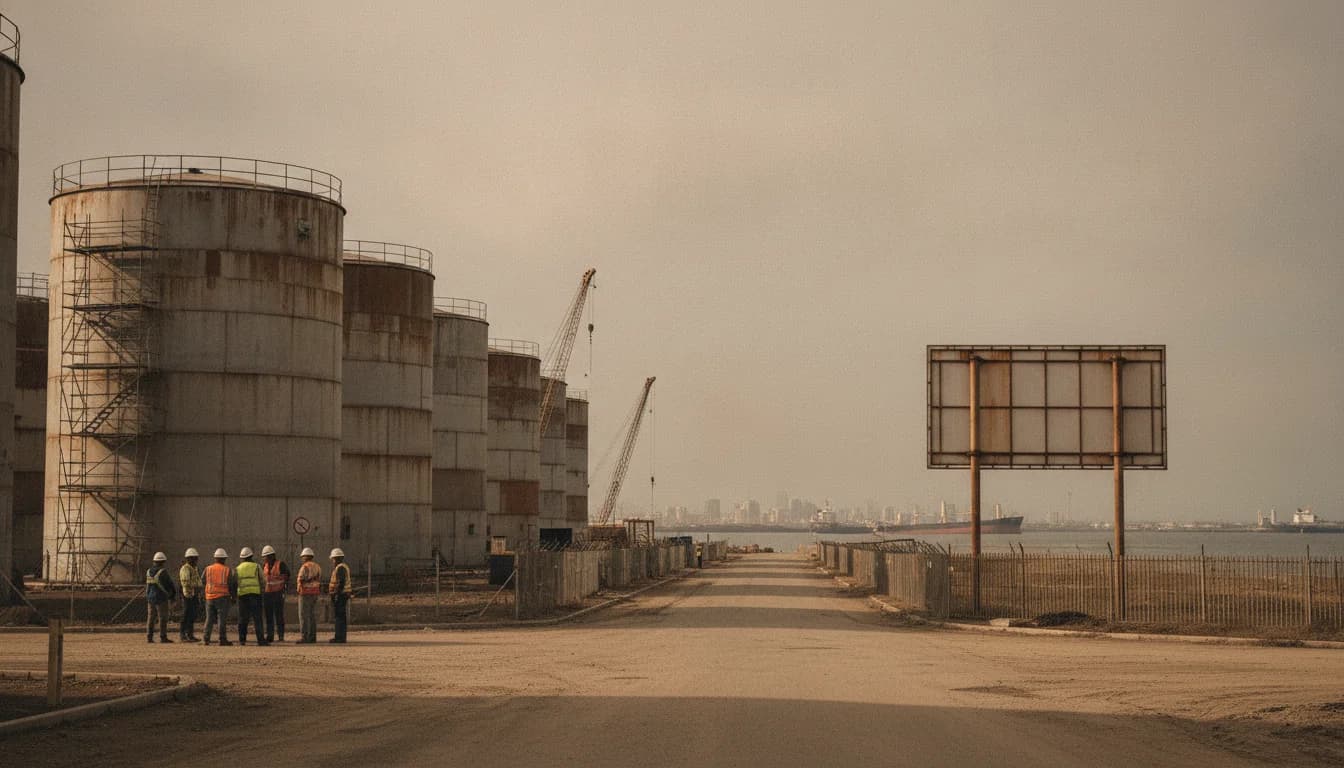
On March 11, 2026, a Los Angeles County Superior Court ordered the City of Long Beach to pause the World Oil Terminals project expansion, which would add two storage tanks, according to Earthjustice. This ruling halts work on the plan to enlarge the facility at the Port of Long Beach, pending a revised environmental review under the California Environmental Quality Act (CEQA). The decision underscores ongoing tensions between port infrastructure development and community concerns over air quality, safety, and health impacts in surrounding neighborhoods. The court’s ruling specifies that the CEQA analysis was inadequate and that a feasible alternative or more complete assessment must be considered before any further approvals proceed. This development arrives as part of a broader debate over how to modernize critical petroleum storage and handling capacity while ensuring robust environmental safeguards. The immediate impact is a pause in the expansion timeline, but the decision also triggers a comprehensive re-examination of project effects on air quality, traffic, and local ecosystems. Earthjustice framed the ruling as a check on permitting processes that, in their view, had proceeded without sufficiently accounting for health risks in adjacent communities. The court’s action does not cancel the underlying project; it requires reworking the environmental review and potentially revisiting mitigations, alternatives, and public participation processes. The two tanks proposed would be added to a site that already houses seven, bringing the total to nine, with a combined capacity of more than 23 million gallons, according to Earthjustice. This expansion, if ultimately approved, would place World Oil Terminals at the heart of a broader shift in how the region manages oil storage and related supply chains. The Port of Long Beach and City Hall have not issued any official statements about the ruling beyond the court’s decision, but local observers say the decision heightens scrutiny of CEQA compliance and fuels ongoing public discussions about port-related infrastructure investments. The ruling arrives at a moment when local environmental groups have intensified their scrutiny of large-scale energy projects near densely populated areas, even as port authorities emphasize the need for resilient supply chains and modernized facilities to support regional energy security. The case also highlights the interplay between environmental law, urban planning, and port operations in a high-stakes context where economic activity meets community health considerations. City officials and World Oil Terminals representatives have previously described the project as a pathway to more efficient terminal operations, while opponents argue that the expansions could increase emissions and neighborhood exposures. The decision’s implications extend beyond Long Beach, offering a precedent for how CEQA analyses are scrutinized in similar infrastructure efforts across Southern California and similar coastal ports. As the CEQA review process resumes, all parties will monitor how revisions balance operational efficiency with environmental and public health protections. The court’s pause injects a level of uncertainty into the World Oil Terminals project timeline, but it also reinforces the importance of rigorous environmental review when major energy infrastructure expansions are proposed near urban communities. For readers following port governance, environmental justice, and energy logistics, the March 11, 2026 ruling is a pivotal moment that could reshape how similar projects are evaluated in the future. The decision also places a spotlight on the crucial role of the CEQA process in balancing economic development with health and environmental safeguards in a region that hosts one of the nation’s busiest ports. The broader question remains: how will Long Beach reconcile the need for storage capacity with heightened scrutiny of environmental and public health impacts as it advances infrastructure planning in a changing energy landscape? The answer will unfold in the coming months as the court mandates a revised environmental review and as stakeholders weighing risks and benefits assess potential paths forward. The World Oil Terminals project, in this context, is not simply a local development—it is a test case for how municipalities coordinate with private operators to deliver essential energy infrastructure while maintaining public trust and environmental responsibility. This evolving situation will be watched closely by policymakers, industry analysts, and communities that stand to be affected by future decisions on refinery-related storage and port-area development. [Earthjustice, March 11, 2026] (earthjustice.org)
What Happened
Court Intervention and Immediate Impact
On March 11, 2026, Earthjustice reported that a Los Angeles County Superior Court ordered the City of Long Beach to pause the World Oil Terminals project expansion. The court’s ruling found the CEQA analysis for the project inadequate and directed the city to redo the environmental review before continuing with approvals. The pause puts a temporary hold on adding two new storage tanks at World Oil Terminals, a move that would alter the site’s footprint and air-emission profile if the project advances. The decision is specific to CEQA compliance rather than a ruling on the project’s merits, which means the fundamental proposal could be revisited once a revised EIR is completed. The court’s order also signals the importance of ensuring that environmental analyses fully reflect potential health and environmental consequences, especially given the project’s proximity to residential areas and schools. The Earthjustice press release frames the ruling as a critical check on how the City evaluated potential impacts, and it emphasizes that the public interest in health protections must be central to any future approvals. This development is a direct development in a case that has drawn attention from local communities and environmental groups. The ruling does not cancel the project outright but requires a new environmental impact assessment and consideration of alternatives and mitigation measures before any reapproval. The press release notes that Long Beach City Council had approved the project in November 2024, despite substantial community opposition, which helps explain both the public interest in the decision and the heightened scrutiny of CEQA compliance in this context. The court’s action, therefore, shifts the focus from merely approving a storage expansion to ensuring that the environmental review process accurately captures risks and safeguards.
As background, the World Oil Tank Installation Project involves expanding the World Oil Terminal site at Pier C Street in Long Beach, an operation run by Ribost Terminal LLC under the World Oil Terminals brand. Public filings and CEQA documents describe two additional 25,000-barrel storage tanks designed to connect to existing infrastructure, with the intent of enhancing storage capacity and operational efficiency. The project’s location within the Port of Long Beach places it in a region characterized by busy maritime activity and substantial truck and rail traffic, which amplifies the importance of accurate environmental analysis. The CEQA documents emphasize that the World Oil Terminal historically hosts multiple tanks and that the proposed tanks would be integrated into an established network of pipelines and loading facilities. The environmental assessment process is intended to evaluate not only air emissions but also potential groundwater impacts, stormwater management, and traffic implications stemming from expanded operations. The public record notes that the Port Master Plan and local zoning context frame the project as a region-serving facility with a long history of hazardous materials handling. The Court’s pause therefore also triggers a renewed opportunity for public comment and for agencies to reassess potential cumulative impacts in the broader port ecosystem. The CEQA process is designed to ensure that planned expansions align with state environmental standards and local land-use policies before any final approvals are rendered.
The court’s ruling is in the context of a broader debate about the World Oil Terminals project and its fit within regional energy and transportation networks. To date, the project’s supporters have argued that the expansion would improve terminal efficiency, support downstream refinery operations, and optimize storage capacity in a single, integrated facility. Critics, however, have highlighted concerns about emissions, neighborhood health risks, and the cumulative environmental burden of additional tanks in proximity to residential communities. The court decision amplifies those concerns by demanding a more thorough environmental review and consideration of alternatives that could reduce health risks or emissions. The decision has immediate procedural consequences: CEQA analysis must be revisited, and any new environmental documentation would be subject to state and local approval processes, including potential public comments and agency review. The ruling thus shifts the emphasis from a straightforward permitting path to a more deliberate, evidence-based approach to evaluating environmental and public health outcomes.
Project Scope and Timeline Details
Public filings associated with the World Oil Tank Installation Project indicate that the terminal currently contains seven tanks, with varying capacities, and that the two proposed tanks would each have a 25,000-barrel capacity. The existing configuration includes tanks with capacities of approximately 43,000; 67,000; and 94,000 barrels, aggregating to a total capacity of about 502,000 barrels. The two additional tanks would be placed in a northwest portion of the World Oil Terminal site and wired into existing utilities and pipelines, with the objective of facilitating more efficient crude storage and offloading to support downstream operations in South Gate. The project would relocate some existing larger tanks to make room for the new tanks while preserving the overall operational framework. In terms of the physical footprint, the site is roughly 6 acres, and the project would be designed to minimize the disruption of adjacent land uses while delivering improved terminal functionality. The CEQA documentation also notes that current permit-to-operate conditions from the South Coast Air Quality Management District govern the tanks and loading racks, which means that operational emissions controls would be a key focus of any revised environmental analysis.
The two new tanks are described in the public documents as 25,000-barrel capacity units with internal floating roofs. These tanks would connect to the World Oil Terminal’s existing receive-only pipeline (RT-1) and to other pipelines serving nearby refineries and terminals. The project description also explains that the larger tanks could be leased to third-party customers for storage of marine fuels or other petroleum products, thereby increasing the terminal’s utilization and potentially rebalancing capacity between on-site tanks. The public record emphasizes that any future operation would remain consistent with the Port Master Plan and would be conducted in a manner that adheres to local environmental and safety standards. The site plan indicates that new tanks would occupy a portion of the northwest corner of the facility, and the project’s footprint would be integrated with the facility’s existing truck loading racks, pipelines, and on-site infrastructure. The existing port context, including proximity to major corridors, is instrumental in understanding the traffic dynamics that a revised CEQA analysis would need to consider. The CEQA materials also discuss the potential for converting older tanks to leased capacity for third-party users, thereby creating a more flexible use of the terminal’s assets if the project proceeds.
In sum, the court’s March 11, 2026 ruling reframes the World Oil Terminals project’s current status from a straightforward permitting path to a more complex, multi-stakeholder environmental review process. The two new 25,000-barrel tanks would be added to seven existing tanks, totaling nine, with a combined capacity exceeding 23 million gallons. The site’s strategic port location alongside the Port of Long Beach’s busy maritime operations deepens the stakes for air quality, traffic, and neighborhood health considerations. While the court’s order pauses expansion, it simultaneously creates a formal deadline for the revised environmental impact analysis and a clear signal that both the port community and environmental advocates will be monitoring the resumption process closely. The underlying facts — the project’s scope, location, and potential environmental implications — are well documented in public CEQA materials and Earthjustice’s report on the court ruling. The core facts and figures referenced in this section derive from those primary documents and are used to provide a clear, data-driven picture of what the pause means for Long Beach, for World Oil Terminals, and for the region’s energy infrastructure planning.
Timeline and Key Milestones (as of current record)
- November 2024: City Council approves the World Oil Terminals project expansion, setting the groundwork for CEQA evaluation and permitting steps.
- January 2023 – February 2023: Notice of Preparation and initial study process begins, detailing the two new 25,000-barrel tanks and their integration with existing infrastructure.
- March 11, 2026: Los Angeles County Superior Court issues a ruling ordering a pause in the project’s expansion pending a revised CEQA review.
- Post-ruling: A redesigned environmental impact report must be prepared, including consideration of alternative approaches and updated mitigation measures before any further approvals can proceed.
The public CEQA documents—two new tanks (25,000 barrels each) located in the northwest corner of the World Oil Terminal—provide the baseline for understanding the project’s scale and how the pause affects the broader site. The NOP and DEIR materials emphasize that the project’s two additional tanks would supplement the seven existing tanks, and the older tanks would be repurposed for third-party storage, should the project move forward. The official CEQA documentation also notes the project’s alignment with the Port Master Plan and the local regulatory framework governing hazardous materials handling, air emissions, and traffic. The court’s decision triggers a pause in work while agencies and the public re-examine the project’s environmental and health implications, with a focus on ensuring that any future approvals fully reflect risks and mitigations.
The court’s decision is a key inflection point for how environmental compliance is applied to port infrastructure expansions, especially when the expansions involve hazardous materials and proximity to populated areas. As the review proceeds, stakeholders will assess how revised CEQA analyses address cumulative impacts, air quality considerations, and project-level mitigation strategies. The World Oil Terminals project thus sits at the intersection of energy logistics, environmental justice, and urban planning, making this pause a significant moment for policy and practice in Southern California’s port region. [Earthjustice, March 11, 2026] (earthjustice.org)
Why It Matters
Environmental and Public Health Implications
CEQA’s core objective is to identify and mitigate environmental and health impacts of major projects, particularly those near populated areas. The Long Beach decision highlights how environmental review must accurately capture air emissions, hazardous materials handling, and potential community exposure. The World Oil Terminals project would add two 25,000-barrel tanks and relocate some existing tanks to make room for the expansion, affecting the terminal’s emissions profile and traffic patterns. Critics have argued that expanded storage capacity for crude oil and petroleum products could heighten local air toxics, while supporters emphasize that the project would modernize an aging facility and improve operational efficiency. The court’s ruling explicitly finds the CEQA analysis inadequate, prompting a re-examination that could modify or reframe anticipated environmental impacts and mitigation measures.
On the scientific and regulatory side, the CEQA process involves input from multiple state and local agencies, including air quality regulators and wildlife authorities. The Notice of Preparation and subsequent DEIR documents reflect that several state and local agencies must review and comment on environmental effects, from air emissions to traffic and water quality. A revised EIR would need to address emissions inventories, risk assessments, and potential regulatory changes that could influence the project’s feasibility or design. This process is not merely procedural; it can influence project scope, technology choices, and safety measures that affect nearby communities and the port’s broader environmental footprint. Public health advocates are watching closely how the revised analysis handles potential exposure scenarios and mitigation options. The broader context includes ongoing efforts to balance port productivity with environmental justice considerations, particularly in neighborhoods adjacent to heavy industrial activity.
Economic and Operational Context for the Port
The World Oil Terminals project sits within a region that relies on robust energy logistics to support local and regional economies. The Port of Long Beach is part of a broader Southern California energy and transport network, and the expansion could, in principle, improve storage capacity and throughput efficiency at a time when demand for petroleum products remains an important economic factor. However, the pause means that anticipated asset utilization and capital commitments may be delayed, which could have knock-on effects on planning for downstream facilities and supply chain resilience. The project’s potential to lease tanks to third-party users or to optimize current tank usage for both company-owned and third-party storage could influence terminal revenue streams and regional energy logistics strategies if ultimately approved.
The two new tanks, each 25,000 barrels, would augment a site that already contains seven tanks with mixed capacities, totaling roughly 502,000 barrels. The potential shift in storage arrangements—moving some larger tanks to new grid positions and freeing capacity for third-party leasing—could alter the terminal’s business model, though any such shifts would depend on the outcomes of the revised CEQA analysis and subsequent approvals. The interplay between environmental safeguards and economic objectives underscores the importance of transparent, data-driven decision-making that ensures both safety and competitiveness within the port ecosystem. In this context, the pause is a reminder that infrastructure projects near major urban centers require careful alignment of environmental performance with economic needs.
Community Perspectives and Equity Considerations
The Long Beach case illustrates how communities near port facilities monitor health and environmental outcomes related to storage and handling of crude oil and refined products. Activists and local residents have argued that expansions can heighten cancer risk, diesel particulate exposure, and other air-quality concerns. The court’s ruling emphasizes the need for a comprehensive and transparent EIR to inform both public health protections and policy choices. The community’s perspective—emphasizing environmental justice and fair consideration of cumulative impacts—will continue to shape how agencies, developers, and the port address concerns as the CEQA process resumes.
The public record surrounding the project also shows that community groups, including environmental justice organizations, have engaged in legal action and advocacy in response to perceived gaps in environmental analysis. The court’s decision reinforces that CEQA compliance is not a mere formality; it is a substantive mechanism for ensuring that health and environmental concerns are fully reflected in project design and approvals. As the revised EIR progresses, advocates on both sides will likely present new data, viewpoints, and mitigation proposals that could influence the final decision.
Broader Context: Port Infrastructure and Environmental Review Trends
The World Oil Terminals pause is happening within a broader national context in which ports, pipelines, and refining infrastructure face intensified scrutiny under environmental and public-health standards. CEQA, federal environmental policies, and state regulations each play roles in how expansions near dense urban areas proceed. The Long Beach decision can be read as part of a pattern in which environmental review processes are used to ensure that energy infrastructure investments align with modern standards for health protections and environmental stewardship. The publicly available CEQA materials from the Port of Long Beach and state agencies illustrate how multi-agency review, public comment, and independent environmental analyses influence project trajectories.
For readers watching energy logistics and market dynamics, the pause underscores that even seemingly straightforward capacity expansions involve complex regulatory and community dimensions. While the immediate, quantifiable impact is the halt on adding two 25,000-barrel tanks, the longer-term implications depend on the revised CEQA process, the identification and assessment of alternatives, and the final decisions by port authorities and local government. The case thus highlights how environmental governance mechanisms shape the pace and structure of port infrastructure investment, potentially affecting regional energy storage capacity planning and supply chain resilience.
What's Next
Next Steps for CEQA Review and Public Involvement
The court-ordered pause requires Long Beach to redo its environmental impact assessment, incorporating more robust analyses of potential health risks and environmental effects. The revised EIR will be expected to address the two new 25,000-barrel tanks, their connection to existing infrastructure, potential third-party leasing of older tanks, and any mitigation strategies to reduce emissions and protect nearby communities. Agencies involved in CEQA review will provide comments, and community members will have opportunities to participate in scoping meetings and public hearings as part of the updated process. The timeline for the revised EIR is not predetermined, but the court’s decision establishes an expectation that the analysis will be completed before any future approvals are considered.
The process will also likely revisit the project’s alignment with the Port Master Plan and other regulatory frameworks governing hazardous materials handling and coastal zone activities. The NOP/DEIR documentation indicates that state and local agencies with jurisdiction over air quality, wildlife, and water resources will scrutinize the project’s design, potential contamination pathways, and mitigation measures. Given the project’s location in a high-traffic port area, revised analyses could incorporate updated traffic projections, potential cumulative air-quality impacts from port operations, and mitigation strategies to address neighborhood exposure concerns. The CEQA process is designed to be iterative, and the pause provides an opportunity for a more thorough, transparent assessment that could affect not only the World Oil Terminals project but also future expansions in the region.
Timeline and Milestones for the Revised Review
The revised EIR process will require formal updates to environmental documentation, including a new round of public comments and agency reviews. Publicizing updated analyses and addressing concerns raised during the initial review will be essential elements of the process. A revised timeline will emerge as Long Beach coordinates with Port authorities, World Oil Terminals, and state agencies to finalize the scope of the EIR, re-evaluate alternative configurations, and refine mitigation measures.
While a precise date for the completion of the revised CEQA review remains uncertain, stakeholders should monitor official port and city communications for milestones related to scoping, draft EIR releases, and potential public hearings. The court’s ruling sets a high bar for the quality and completeness of the review, ensuring that the final decision on any project modifications will be grounded in robust environmental data and community input.
What to Watch For in the Near Term
- Updates to the environmental impact analysis: A revised EIR will be published, incorporating more comprehensive assessments of air quality, health risk, and traffic implications around the World Oil Terminals site.
- Potential alternatives and mitigations: The EIR will likely evaluate alternatives to the two-tank expansion, as well as mitigations to reduce emissions and health risks for nearby residents.
- Community engagement and transparency: Public comment periods and community meetings will be essential to understanding local concerns and ensuring that stakeholder voices are reflected in the final decision.
- Regulatory and interagency coordination: The process will involve multiple state and local agencies, requiring coordinated input to ensure compliance with environmental, safety, and land-use requirements.
What’s Next: A Look at the Road Ahead
The next phase centers on developing a revised CEQA document that adequately captures potential environmental and public health impacts, with a focus on cumulative effects, air quality, and safety implications near residential neighborhoods. The timeline will depend on the agencies’ capacity to review the revised materials and the public’s engagement, but the court’s ruling ensures that the analysis will be comprehensive and transparent.
Stakeholders should prepare for renewed public discussions and potential changes to the project’s configuration or conditions. While the court pause interrupts the immediate construction timetable, it also fosters a more rigorous decision-making process that could ultimately lead to a more robust and defensible project design if approved. The revised CEQA analysis will shape whether the World Oil Terminals project proceeds, undergoes modifications, or is scaled back to address environmental and health considerations more effectively.
Closing
The World Oil Terminals project pause marks a critical inflection point for port infrastructure development and environmental governance in Southern California. The court’s March 11, 2026 ruling ensures that environmental review remains a central, accountable component of any expansion of hazardous storage facilities at the Port of Long Beach. As Long Beach and World Oil Terminals proceed with a renewed environmental analysis, readers should expect a transparent, data-driven process that weighs storage capacity needs against potential health and environmental risks for nearby communities. The CEQA framework—together with local planning policies and port master planning—will guide the next steps, with public participation and independent review playing pivotal roles in shaping final outcomes. The ongoing story will unfold over the coming months as agencies issue new analyses, consider alternatives, and determine whether the World Oil Terminals project can move forward in a manner that meets environmental, health, and safety standards while supporting regional energy logistics. For ongoing updates, monitor official statements from the Port of Long Beach, the City of Long Beach, and Earthjustice’s ongoing coverage and analysis of CEQA reviews related to World Oil Terminals.
About the author
Marisol Vega
Marisol Vega is the editor of Los Angeles Monday. She has covered City Hall, county government, and land use in Southern California, and edits the paper's daily report.