News
Ventura Ranch Farmworker Housing Project Receives Approval
The Ventura County Planning Commission approved the 328-unit Ventura Ranch Farmworker Housing Project on February 19, 2026, aiming to enhance…
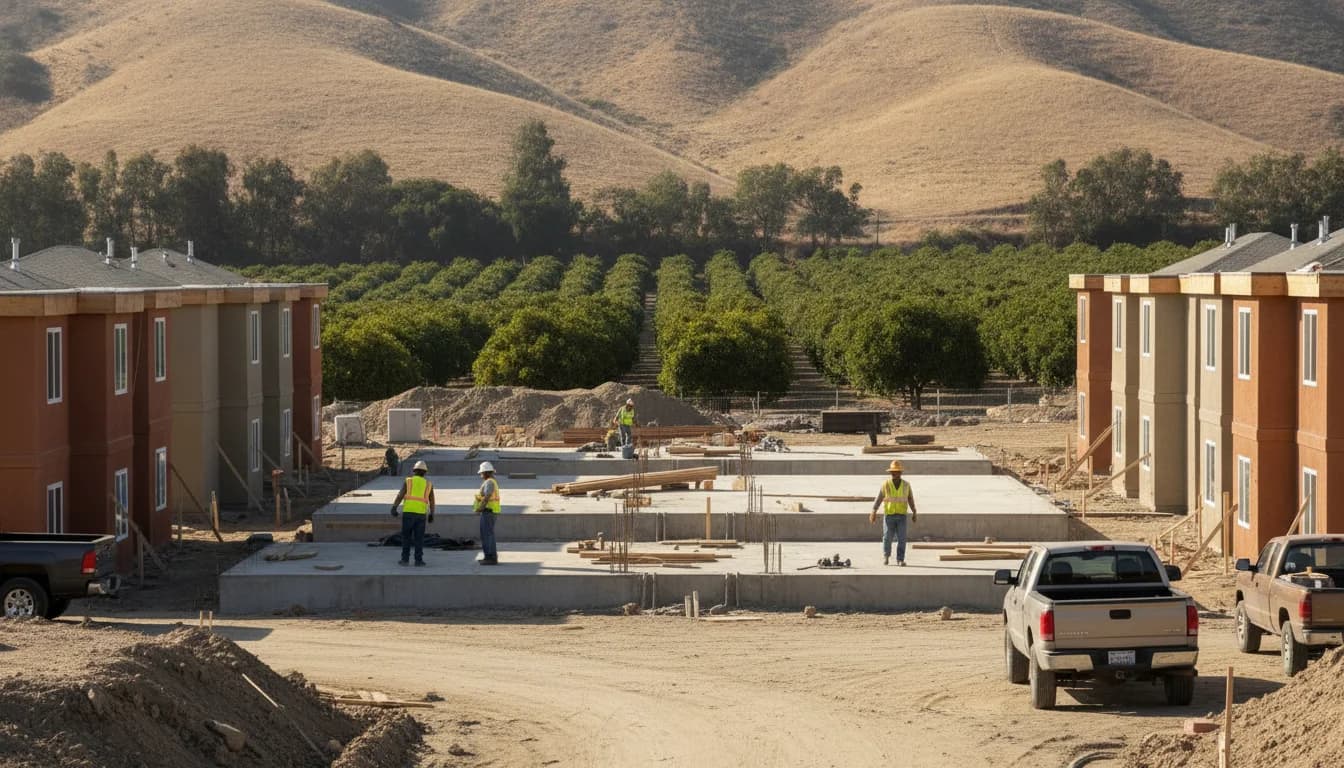
On February 19, 2026, the Ventura County Planning Commission approved the Ventura Ranch Farmworker Housing Project, a 328-unit for-rent farmworker housing complex planned on roughly 19.6 acres of an 82.9-acre project site north of the City of Ventura. This decision, arrived at after hours of public testimony and a split vote, signals a milestone in the county’s ongoing effort to expand affordable housing options for agricultural workers while balancing environmental and community concerns. The approval comes with appeals filed during the period that followed the vote, and a Board of Supervisors hearing on those appeals is scheduled for May 19, 2026. The project sits within unincorporated Ventura County, with its footprint extending toward the Norway Drive and North Ventura Avenue area, a setting that has drawn attention from both labor advocates and local residents. This piece reviews what happened, why it matters for housing and labor markets, and what to watch next as the process continues. For readers following the official track, the county’s Planning Division published project materials and status updates detailing the timeline and scope of the Ventura Ranch Farmworker Housing Project. See the County’s project page and the CEQA filing for primary source detail. Ventura Ranch Farmworker Housing Project details on Ventura County RMA (rma.venturacounty.gov) CEQA analysis and project description (ceqanet.lci.ca.gov)
Section 1: What Happened
Application Timeline
- May 12, 2023: The County of Ventura received applications for a Planned Development Permit, a Tentative Parcel Map, and a Discretionary Tree Permit to authorize a farmworker housing complex named Ventura Ranch. The county later deemed the application complete on April 24, 2024, marking the formal eligibility for discretionary review. These milestones are outlined in the county’s planning materials and reflect the project’s long lead time in local approvals. [Ventura Ranch Farmworker Housing Project official page] (rma.venturacounty.gov)
- December 2025–February 2026: The environmental review process advanced, including a 15183 consistency analysis and the preparation of a CEQA exemption checklist for a project that aligns with existing General Plan densities. The county documented that the project would be reviewed under CEQA Section 15183, with a draft Exemption Checklist posted for public comment in late 2025. [Exemption Checklist and CEQA materials] (rmadocs.venturacounty.gov)
Project Scope and Layout
- The Ventura Ranch Farmworker Housing Project is described as a 328-unit housing complex designed to be 100 percent affordable to qualified farmworkers and their families. The housing footprint sits on approximately 19.6 acres of the overall 82.9-acre site, with the remaining acreage designated for conservation. The plan envisions 18 three-story residential buildings, plus two community centers and supporting amenities. The development is staged in three phases: Phase 1 with 92 units, Phase 2 with 104 units, and Phase 3 with 132 units. The project includes a mix of one-, two-, and three-bedroom units, along with parking, play areas, and a community garden. The layout and phase details are captured in county planning documents and the CEQA exemption materials. [Ventura Ranch Farmworker Housing Project official page] (rma.venturacounty.gov) [Exemption Checklist] (rmadocs.venturacounty.gov)
- The environmental review identifies the project as a 100 percent affordable farmworker housing complex, designed to minimize environmental impacts through adherence to the county’s General Plan EIR and related mitigation measures. The CEQA analysis notes the project would rely on a Section 15183 exemption because it is consistent with existing density and policy frameworks, with carefully controlled site layout and open-space conservation areas (Parcel 4) set aside to remain open space in perpetuity. [CEQA Exemption Checklist and CEQANET filing] (rmadocs.venturacounty.gov)
The Approval Decision and Appeals
- February 19, 2026: The Ventura County Planning Commission approved the Ventura Ranch Farmworker Housing Project on a 3-2 vote. The vote mark represents a pivotal moment in the county’s approach to farmworker housing within a largely rural, open-space setting. Appeals were filed during the appeal period, which closed on March 2, 2026. The Board of Supervisors is scheduled to hear those appeals on May 19, 2026, at 1:30 p.m. The status update and hearing schedule are included on the county’s project page. [Ventura Ranch Farmworker Housing Project page] (rma.venturacounty.gov)
Section 2: Why It Matters
Housing Affordability and Workforce Stability
The project is explicitly designed as 100 percent affordable for farmworkers earning 80 percent or less of the area median income (AMI). That design choice aligns with Ventura County’s ongoing efforts to address a chronic shortage of affordable housing options for agricultural workers who are essential to the county’s economy. The CEQA documentation emphasizes the housing affordability component and the targeted income restrictions as central to the project’s purpose and feasibility. The exemption checklist and related CEQA materials detail the unit mix and price targets, underscoring the project’s role in stabilizing the local agricultural workforce by reducing commute times and improving living conditions for farmworkers. [Exemption Checklist] (rmadocs.venturacounty.gov) [CEQA filing summary] (ceqanet.lci.ca.gov)
A publicly stated objective across Ventura County housing discussions is to align farmworker housing with local environmental constraints and regional growth plans. The county’s Farmworker Housing Study and Action Plan, launched in fall 2021, aims to quantify farmworker populations and housing needs, guiding future investments and policies. That study is part of a broader county strategy to coordinate funding, identify barriers, and implement programs that support a stable farmworker workforce while balancing community impacts. This context matters as the Ventura Ranch project moves through the approvals pipeline. [Farmworker Housing Study and Action Plan overview] (rma.venturacounty.gov)
Local Planning and CEQA Dynamics
The Planning Commission’s February 2026 decision occurred within a CEQA framework that relies on a Section 15183 exemption due to conformance with the General Plan EIR and density requirements. The exemption analysis also documents that the housing complex would be developed in three phases across roughly 19.6 to 19.8 acres of the project site, with a separate 63-acre conservation parcel to be transferred to a conservation organization or public agency. This arrangement reflects a broader trend in Southern California counties to combine resilient housing development with conservation objectives in large parcels. [CEQANET filing summary] (ceqanet.lci.ca.gov) [Exemption Checklist] (rmadocs.venturacounty.gov)
The dual-tracked nature of the project—planning commission approval and subsequent Board of Supervisors oversight—mirrors how Ventura County manages large affordable housing projects within environmental and neighborhood expectations. The public process has included notices, hearings, and opportunities for local input, with an emphasis on balancing housing needs against neighborhood character and infrastructure considerations. The project page emphasizes ongoing public notification and updates, signaling a data-driven, accountable approach to large-scale farmworker housing. [Ventura Ranch Farmworker Housing Project page] (rma.venturacounty.gov)
Market and Technology Considerations
The Ventura Ranch Farmworker Housing Project sits at the intersection of affordable housing expansion and agricultural labor needs. Market analysts have long noted that farmworker housing is a specialized segment of the broader affordable-housing market, with unique requirements for accessibility, proximity to agricultural operations, and programmatic oversight to ensure that units go to eligible workers. Ventura County’s ongoing Farmworker Housing Study and Action Plan highlights the need for targeted funding mechanisms and partnerships with agricultural employers to realize scalable solutions. This planning framework helps illuminate how technology-enabled data collection and workforce analytics can inform siting, financing, and management of farmworker housing. [Farmworker Housing Study and Action Plan overview] (rma.venturacounty.gov)
While the Ventura Ranch project focuses on a particular site and unit count, the county’s broader housing strategy includes examples like Rancho Verde and Somis Ranch Farmworker Housing Complex, illustrating a multi-site approach to farmworker housing. These related projects demonstrate a pattern of pairing affordable housing with environmental stewardship and sustainable design features, providing a context for technology-assisted management, energy efficiency, and community integration. [Somis Ranch Farmworker Housing Complex environmental materials] (rma.venturacounty.gov)
Section 3: What’s Next
Next Steps for Approvals and Oversight
Board of Supervisors hearing on the Ventura Ranch Farmworker Housing Project appeals is scheduled for May 19, 2026, at 1:30 p.m. The Board will review the Planning Commission’s decision in light of the community input and legal standards, including considerations under the Housing Accountability Act and CEQA. The scheduling details and contact information for updates are available on the county’s project page. [Ventura Ranch Farmworker Housing Project page] (rma.venturacounty.gov)
Beyond the appeals, the project will proceed with final discretionary approvals, the issuance of permits, and the phased construction plan. The project’s three-phase phasing (Phase 1: 92 units; Phase 2: 104 units; Phase 3: 132 units) will guide construction sequencing, infrastructure improvements, and coordination with local utilities and schools. The exact phasing and on-site amenities are described in the CEQA exemption materials. [Exemption Checklist] (rmadocs.venturacounty.gov)
What to Watch For
- Monitoring and community engagement: The county continues to encourage public participation through the project’s subscribe-for-notifications feature, which allows residents to stay informed about hearings, staff reports, and updates on the approval process. This ongoing engagement is a key feature of how Ventura County implements major developments while seeking to minimize impacts on adjacent neighborhoods. [Ventura Ranch Farmworker Housing Project page] (rma.venturacounty.gov)
- Funding and management: The housing complex will be managed by AMCAL Housing in accordance with county requirements for farmworker housing, including employment verification and income eligibility criteria. This management model is typical for similar developments and is intended to ensure that units remain affordable and accessible to eligible farmworkers and their families. [Ventura Ranch Farmworker Housing Project page] (rma.venturacounty.gov)
Closing
The Ventura Ranch Farmworker Housing Project marks a significant milestone in Ventura County’s effort to expand affordable housing for agricultural workers while balancing environmental stewardship and neighborhood concerns. With a 328-unit footprint spread across a three-phased design on roughly 19.6 acres, the project aims to deliver a stable housing platform for farmworkers near their workplaces, reducing commuting stress and supporting the local labor supply. As the process moves into appeals and potential approvals at the Board of Supervisors level, observers will watch how the project addresses traffic, school capacity, and open-space preservation in the context of a growing agricultural economy.
Readers seeking updates can monitor the county’s project page for real-time notices, subscribe to alerts, and review the CEQA materials that detail the project’s environmental considerations and mitigation measures. The next key milestone is the Board of Supervisors hearing on the appeals, scheduled for May 19, 2026, which could shape the project’s final approvals and timeline for construction.
About the author
Marisol Vega
Marisol Vega is the editor of Los Angeles Monday. She has covered City Hall, county government, and land use in Southern California, and edits the paper's daily report.