News
California Opens Together Foster Care Village in Palmdale
On September 9, 2026, Palmdale, California, inaugurated Together California: A Village for Brothers and Sisters, a foster care village aimed at keeping…
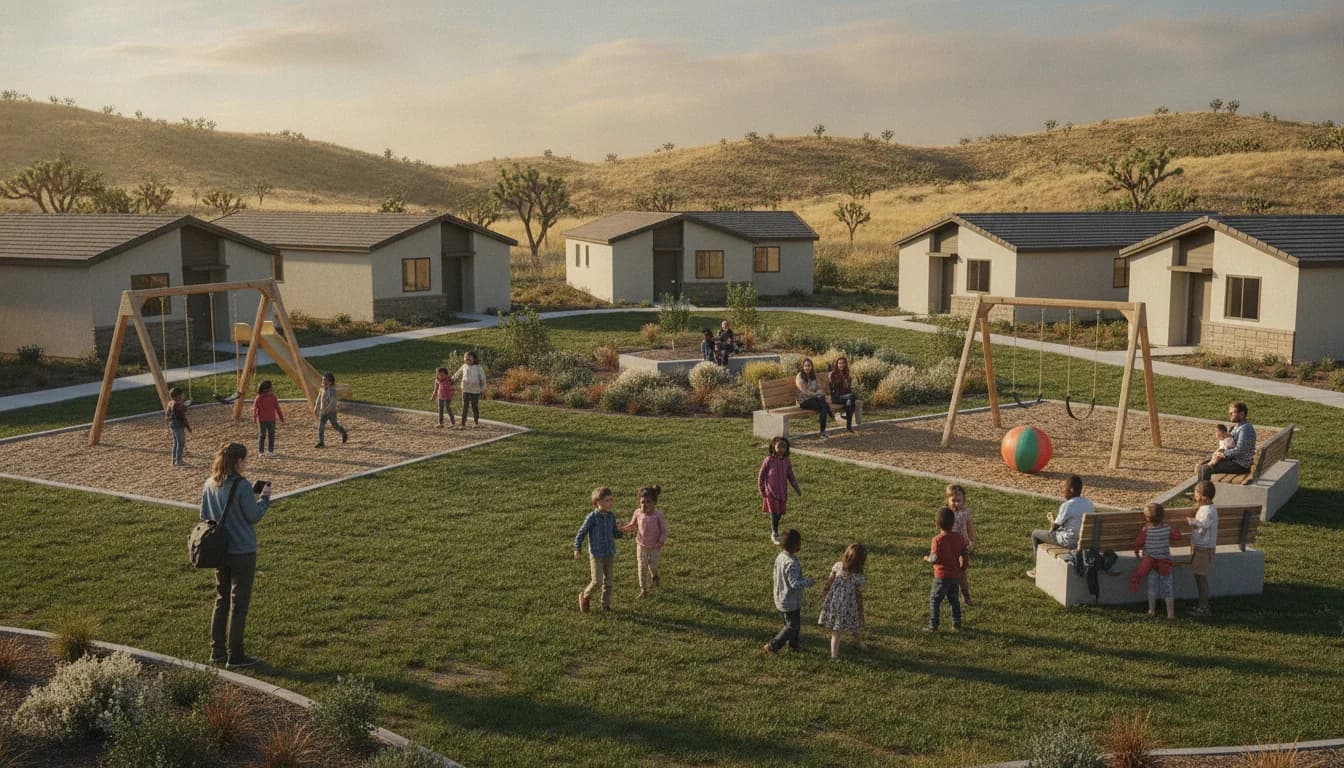
On September 9, 2026, Palmdale, California welcomed the grand opening of Together California: A Village for Brothers and Sisters, a pioneering foster care village designed to keep sibling groups together while receiving comprehensive care. The event marks the culmination of years of planning, fundraising, and collaboration among city leaders, nonprofit partners, and private donors. The official grand opening, highlighted by a ceremony with design and construction partners, underscored a bold commitment to reimagining foster care as a village-based model rather than a collection of isolated homes. This milestone is central to a broader California effort to pilot village-scale care that prioritizes sibling bonds, stability, and coordinated services. The project’s design and execution reflect a deliberate approach to care that blends architecture, social services, and community involvement in a single, cohesive footprint that Palmdale champions as a model for other communities. The village itself—12 homes plus a central community center—was designed to house siblings together and to provide on-site access to case management, counseling, education, healthcare, and family supports. The opening confirms Palmdale as a testing ground for a model that could influence foster care practice nationwide. For readers tracking the evolution of foster care policy, this event offers a tangible, near-term data point about what a village approach can look like in practice. This overview synthesizes the key moments, the stakeholders involved, and the implications for families, local government, and the broader foster care system in California. Together California Foster Care Village Palmdale stands as a concrete example of how philanthropic capital, municipal backing, and design excellence converge to reframe care for vulnerable children.
Together California completed its Palmdale Village on September 9, 2026, featuring 12 homes and a community center, according to AC Martin's Grand Opening release.
What Happened
Groundbreaking milestone anchors the project
AP News reported that Christian Bale formally broke ground on the foster village project in Palmdale on February 7, 2024. The ceremony brought together local officials, donors, and experts in child welfare to launch what would become a 12-home village designed to keep siblings together throughout foster care. The event was framed not as a one-off philanthropic act, but as the beginning of a long-term, community-led approach to care, with Bale's involvement helping to catalyze public and private support for the concept. The February 2024 groundbreaking set the stage for a development timeline that would extend over multiple years as funding, design, and construction proceeded. For readers following the sequence of events, the February 2024 milestone is a fixed reference point in a longer narrative about how stylized village models move from concept to reality. Primary coverage of this moment is provided by AP News, documenting the initial breakthrough in Palmdale. (AP News, February 7, 2024) (apnews.com)
Village design and on-site facilities
City of Palmdale officials publicly described the project as California’s first city-led rollout of a “village” concept intended to house siblings together within a cohesive care ecosystem. The community plan called for 12 three-bedroom townhomes, each designed to accommodate sibling groups, along with a centralized community center to deliver on-site services, programming, and coordination of case management. The city’s briefing materials emphasized that the village would allow siblings entering foster care to remain connected, reducing trauma associated with separation and improving access to consistent educational and health services. The village plan also highlighted architectural collaboration with AC Martin, a leading design firm involved in the project’s concept and execution. (City of Palmdale news materials; Groundbreaking Ceremony overview) (cityofpalmdaleca.gov)
Grand opening and completion
The project culminated in a formal grand opening on September 9, 2026, described in detail by AC Martin, which highlighted the completion of Together California: A Village for Brothers and Sisters in Palmdale. The grand opening marks the transition from construction to operations, with the village now positioned to house sibling groups under a unified care model that includes on-site staff and integrated services. The AC Martin release confirms the date, the scale (12 homes and a community center), and the purpose of the village as a replicable model for other communities seeking to preserve family bonds in foster care. (AC Martin Grand Opening; Groundbreaking Ceremony reference) (acmartin.com)
Public funding and municipal support
Public and private funding support for Together California in Palmdale has been a core component of turning the village concept into a real development. In the early phase, Palmdale officials approved a dedicated sum to cover pre-construction costs and related activities, underscoring a municipal commitment to the project’s success. This funding helped unlock design work, staffing plans, and initial site preparations that enabled the project to move from concept to construction and, eventually, to completion. The project’s financial architecture includes a combination of philanthropic contributions and city support designed to ensure long-term sustainability and service delivery. (Together California official materials and Palmdale-related disclosures) (togethercalifornia.org)
What the village comprises
In practical terms, Together California: A Village for Brothers and Sisters in Palmdale represents a carefully configured ecosystem for foster care. The village concept integrates housing, on-site care management, family-focused programming, and community facilities designed to meet children’s needs in a stable, family-like environment. The site plan emphasizes continuity for siblings and a coordinated approach to services that would typically require multiple agencies working independently. The village model aligns with Together California’s broader mission to keep siblings together whenever possible and to provide a care environment that supports reunification or stable permanency. (Our Village page and official materials) (togethercalifornia.org)
A timeline anchored in real dates
The project’s timeline comprises at least two fixed, widely reported milestones: the February 7, 2024 groundbreaking in Palmdale and the September 9, 2026 grand opening. These dates frame the arc from initial mobilization to completion and are corroborated by multiple primary sources, including AP News for the 2024 groundbreaking and AC Martin’s grand-opening documentation for the 2026 completion. The timeline’s alignment with city and design partner disclosures also reflects a collaborative execution across public and private actors. (AP News; AC Martin; City of Palmdale materials) (apnews.com)
Section 2: Why It Matters
A new care model with measurable benefits
Together California’s village concept centers on continuity of care and sibling bonds—principles that the organization highlights across its communications and program descriptions. The model argues that keeping siblings together in a single, coordinated setting can reduce disruption, improve educational outcomes, and support emotional and behavioral health during the foster care journey. The official materials describe how the village design enables on-site access to case management, counseling, and coordinated services, all within a family-like environment that promotes stability and healing. This data-driven approach is meant to offer a replicable blueprint for other communities seeking to enhance outcomes for foster youth through a village-scale design. (Together California model of care; Our Village page) (togethercalifornia.org)
“Together California prioritizes the importance of sibling bonds and seeks to minimize the trauma associated often with separation when children enter the foster care system.” This line from the organization’s published materials crystallizes the philosophy behind the Palmdale village and similar future developments. It is a guiding principle that informs policy discussions, philanthropic strategy, and municipal partnerships as the model expands beyond Palmdale. (Together California materials) (togethercalifornia.org)
Calibrating impact with local and regional contexts
Palmdale’s embrace of this village model is notable within California’s broader foster care landscape. Local leaders have framed the project as a pilot for a new way to deliver foster care services—one that leverages on-site care staff, community spaces, and a design that physically supports sibling cohesion. The approach aligns with state-level discussions about family preservation, as seen in broader child welfare practice and policy conversations; Palmdale’s municipal backing signals a willingness to test and iterate on policy-inspired care innovations at the city level. While the Palmdale project is a singular case, its progress offers a data point for policymakers evaluating the return on investment in village-based care, including potential reductions in out-of-home placements and improved school stability for participating youths. (City of Palmdale materials; Together California model documentation) (cityofpalmdaleca.gov)
Economic and community implications
Beyond direct child welfare outcomes, the Palmdale village is a case study in how social impact projects mobilize design expertise, philanthropic capital, and municipal support to create a new asset class in community development. The involvement of renowned architecture firms, visible fundraising campaigns, and official city engagement demonstrates how a social enterprise can intersect with urban planning and economic development. The grand opening itself is a signal of what a multi-stakeholder collaboration can achieve when aligned around a shared mission: keep families together, provide stable housing, and deliver integrated services under one roof. The visible investment and the early adoption by the City of Palmdale may also influence private-sector interest in similar ventures, potentially catalyzing additional partnerships and fundraising opportunities for future village-based efforts across the state. (AC Martin; City of Palmdale; Our Village materials) (acmartin.com)
A critical appraisal and the need for ongoing assessment
As with any new model, it is essential to monitor outcomes, identify best practices, and address potential challenges. Critics may ask whether a village approach can scale across diverse communities with different demographics, funding environments, and regulatory frameworks. Proponents counter that Palmdale serves as a controlled experiment with clearly defined outcomes, measurable milestones, and a governance structure designed to ensure quality and accountability. The ongoing evaluation should track housing stability, family reunification rates, educational continuity, access to health and mental health services, and long-term well-being indicators for youth participants. The Palmdale project offers an opportunity to collect longitudinal data that could inform statewide policy decisions and funding priorities for foster care modernization. (Model documentation; City and partner disclosures) (togethercalifornia.org)
What’s next for Together California and Palmdale
With the grand opening in hand, attention shifts to operations, service delivery, and the long-term sustainability of the village. Key next steps include establishing standard operating procedures for on-site care teams, integrating school partnerships to ensure continuity for youth participants, and coordinating with health systems to provide comprehensive medical and mental health services. Palmdale officials and Together California will likely focus on fundraising strategies to maintain and grow the village’s capacity, plus exploring opportunities to replicate the model in other California communities, starting with counties that have significant foster care needs. The cross-sector collaboration demonstrated in Palmdale provides a framework that other municipalities may adapt to their own local contexts, with careful attention to funding mechanisms, staffing, and governance. (AC Martin; Together California; City of Palmdale) (acmartin.com)
A notable, data-driven baseline for future comparison
The Palmdale village’s completion also creates a concrete baseline against which to measure future village projects. By documenting inputs (acquisition of land, design costs, municipal support) and outputs (number of homes, community center, on-site services, and formal grand opening), researchers, policymakers, and practitioners can compare Palmdale’s trajectory with other potential sites, identify success factors, and adjust program designs for scalability. This kind of cross-site learning is a hallmark of modern, data-driven policy experiments in social services, and Palmdale offers a public-facing example that can be examined alongside other housing and care interventions in California. (City of Palmdale disclosures; Our Village materials) (cityofpalmdaleca.gov)
Section 3: What’s Next
Timeline and milestones to watch
- Ongoing program implementation: As of the grand opening, the village transitions into its operational phase, with a focus on providing on-site services, ongoing family engagement, and continuous monitoring of youth outcomes.
- Replication studies: If Palmdale’s village proves effective, expect state and local agencies to explore replication across additional jurisdictions, which would involve site selection processes, financing strategies, and governance structures that mirror Palmdale’s approach.
- Longitudinal outcome tracking: Data collection on educational attainment, mental health status, placement stability, and family reunification rates will be central to assessing the village model’s effectiveness over time.
Stakeholders and governance
The project is a product of collaboration among philanthropists, the City of Palmdale, Together California, AC Martin (design), and local service providers. Governance models typically include a steering committee consisting of city officials, community leaders, and independent evaluators to oversee service delivery, compliance with licensing requirements, and financial accountability. The Palmdale experience could inform policy discussions about funding, procurement, and interagency collaboration for future village initiatives in other communities. (City disclosures; Groundbreaking and Grand Opening materials) (cityofpalmdaleca.gov)
What to watch for next
- Service integration outcomes: The effectiveness of on-site care coordination, education supports, and mental health services in improving youth stability will be a primary signal of success.
- Community feedback: Engagement with families, caregivers, and local residents will help determine the village model’s social acceptance and acceptance within broader community planning.
- Aggregated insights for policy: Data from Palmdale could influence broader foster care policy discussions about sibling preservation, housing strategies for foster youth, and the role of philanthropy in public service delivery.
Closing
The Palmdale iteration of Together California represents a tangible step toward rethinking how foster care can be organized to prioritize family bonds, stability, and coordinated care. The journey from February 7, 2024, groundbreaking to September 9, 2026, grand opening demonstrates what can be achieved when city leadership, design partners, and philanthropic supporters align around a shared mission. As Palmdale now moves from construction to operation, the village will serve as a live case study for policymakers, practitioners, and families seeking a more integrated, compassionate approach to foster care.
Readers seeking ongoing updates should monitor official channels from Together California, the City of Palmdale, and design partners like AC Martin for new developments, program evaluations, and potential announcements about similar village-based care initiatives in other California communities. Links to primary sources provide direct access to the event’s official documentation, planning materials, and project milestones for those who want to verify the timeline, project scope, and governance details. (AC Martin press release; City of Palmdale materials; Together California official pages) (acmartin.com)
The Palmdale project illustrates how modern care models can be designed, funded, and executed to deliver tangible benefits for vulnerable children and their families. As more communities observe outcomes and gather data, Together California’s village approach could influence future foster care innovations, shaped by ongoing evaluation, community input, and a steadfast focus on keeping siblings together whenever possible.
If you’re following this story as a journalist, note the dates and the primary sources that anchor the reporting: February 7, 2024 (groundbreaking), September 9, 2026 (grand opening), and the design and funding details provided by AC Martin and the City of Palmdale. The village’s formal announcements, site plans, and press releases remain the most reliable points of reference for readers who want to verify the event chronology and key facts. (AP News; AC Martin; City of Palmdale) (apnews.com)
About the author
Priya Raghunathan
Priya Raghunathan writes about culture and sport for Los Angeles Monday: film and music, the restaurants feeding the city, and the teams and venues carrying it through the week.