News
LAUSD Updates School Facilities Bond Program Timeline
The LAUSD bond program is modernizing schools, with $25.2 billion in funding and over 700 projects in pre-construction, aimed at improving…
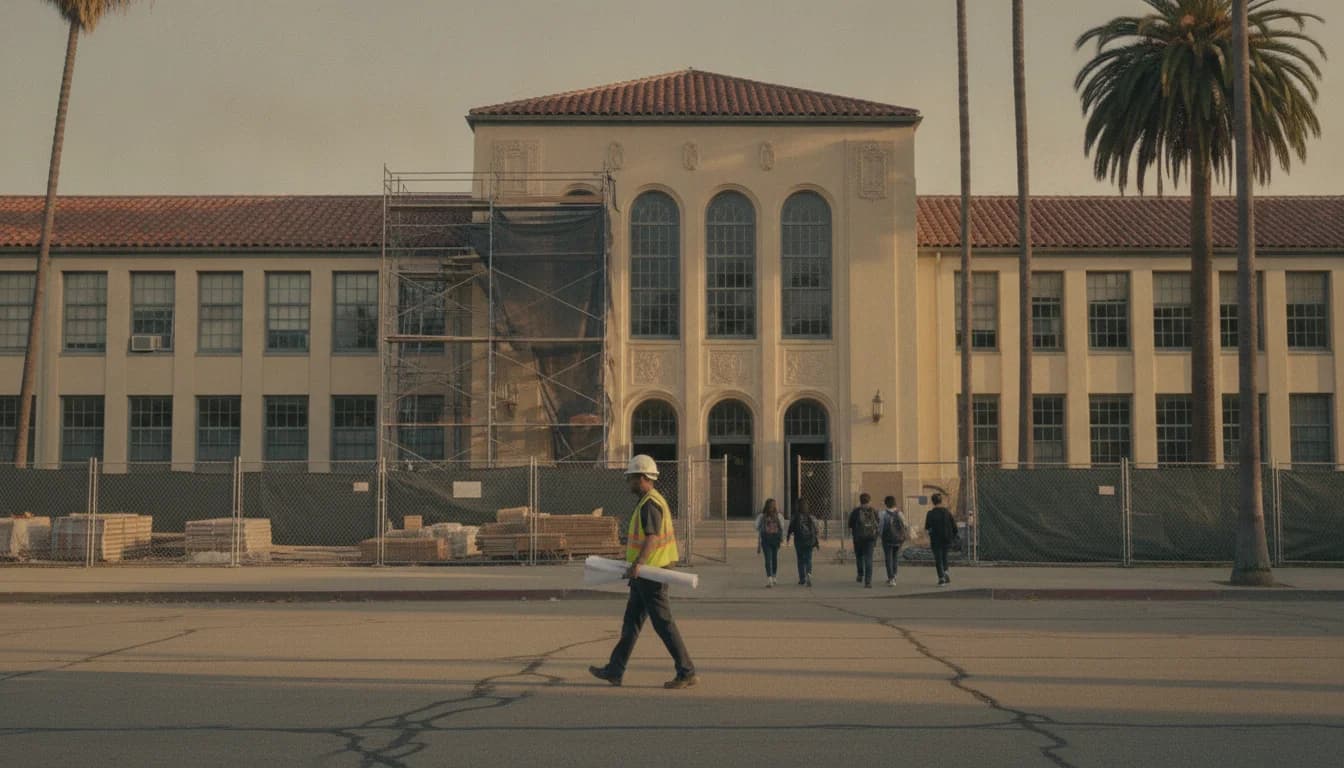
Los Angeles Unified’s school facilities bond program stands at a pivotal moment as voters’ approvals in recent years unlocked a massive, ongoing modernization push. This review examines how the LAUSD school facilities bond program is evolving, how funds are allocated, and what the timelines mean for students, teachers, and communities across the district. Using the latest data from LAUSD’s Facilities Services Division and related district planning documents, this report presents a data-driven snapshot of funding levels, project pipelines, and the technologies shaping today’s campuses.
The district’s bond program has long been central to addressing aging infrastructure and overcrowding. In 2014, the Board of Education approved the creation of the School Upgrade Program (SUP), a framework designed to modernize and upgrade facilities to improve health, safety, and educational quality. This shift broadened the district’s approach from mere new construction to comprehensive upgrades across existing campuses, with an emphasis on modern learning environments, safety, and accessibility. According to the district’s bond program materials, SUP funding was initially substantial and continues to grow as new voter-approved measures come online. LAUSD notes that including Measure US, which was approved by voters in November 2024, SUP funding has increased to $25.2 billion, of which $22.3 billion is managed by the Facilities Services Division (FSD). (facilities.lausd.org)
As the bond program has expanded, the district has tracked a sprawling pipeline of work. Since the program’s inception, FSD has completed more than 25,000 school modernization projects, and the current portfolio includes hundreds of active initiatives across multiple categories of need. The FSD’s bond program dashboard highlights that there are over 700 Board-approved projects in the pre-construction phase valued at about $4.7 billion and more than 220 projects under construction valued at roughly $4.6 billion. These figures reflect a broad, ongoing effort to upgrade classrooms, athletic facilities, cafeteria spaces, accessibility improvements, outdoor learning environments, and related infrastructure. (facilities.lausd.org)
The district’s work under the SUP is organized around a set of funding categories that guide how money is spent and how projects are prioritized. The bond program’s current focus includes major campus modernization, upgrades and reconfigurations to support wellness and learning, critical replacements and upgrades of building systems, ADA transition work, and targeted enhancements for charter school facilities among others. The funding categories are designed to ensure that projects address both ongoing maintenance needs and future-ready learning environments, including energy efficiency, climate resilience, and indoor-outdoor learning spaces. The same bond program page notes that SUP funding was expanded with Measure US, establishing a broader funding envelope for these categories. (facilities.lausd.org)
Opening with the news, the district’s governance body continues to push forward with a multi-year investment plan that aligns with the 2022–2026 Strategic Plan. The Strategic Execution Plans reflect ongoing approvals and project scoping through 2025–26 and beyond, with a steady cadence of approvals for individual projects and program alignment activities. The SEP archive shows the district approving scores of individual projects—ranging from outdoor learning spaces to classroom upgrades and accessibility improvements—reflecting a disciplined, board-approved approach to how bond funds are deployed and tracked. This governance framework is essential for maintaining transparency and accountability as the program scales. (facilities.lausd.org)
What Happened
Measure US and the School Upgrade Program expansion
- Measure US was approved by voters in November 2024, boosting SUP funding and elevating the scale of the school facilities bond program. The Facilities Services Division notes that including Measure US has increased SUP funding to $25.2 billion, with $22.3 billion of that amount managed by FSD. This is a milestone that informs the program’s scale and execution, influencing the pace of modernization across thousands of classrooms and campuses. In practical terms, the added funding expanded the capacity for major modernizations, upgrades, and reconfigurations at schools district-wide. (facilities.lausd.org)
Current funding structure and program scope
- The SUP framework now sits atop a broad, long-range plan to modernize facilities and deliver safe, healthy, and technologically capable spaces for students. The FSD page explicitly links the SUP to a structured framework of investments in: Major Modernizations, Upgrades & Reconfigurations to School Campuses; Critical Replacements & Upgrades of School Building/Site Systems; School Cafeteria Upgrades; ADA transition work; Charter School Facilities Upgrades & Expansions; and related priority projects by region and board member. This multi-category approach ensures that a diverse set of campus needs is funded in a coordinated manner. (facilities.lausd.org)
Pipeline and current project status
- Since the program’s inception, the district has completed more than 25,000 modernization projects, underscoring the scale and historical depth of the bond program’s impact. Ongoing work comprises hundreds of active initiatives: more than 700 projects are in pre-construction with a combined value around $4.7 billion, and over 220 projects are under construction with a value near $4.6 billion. These numbers illustrate a robust project pipeline and substantial infrastructure activity across the district’s 700-plus square miles. (facilities.lausd.org)
Strategic planning and oversight
- The district’s bond program is steered by a formal planning and oversight framework, including a Strategic Execution Plan and a dedicated Bond Oversight Committee. The SEP page chronicles ongoing project approvals, alignment activities with Measure US priorities, and the integration of COP-funded initiatives into the SUP framework. The Bond Oversight Committee provides independent oversight of bond expenditures and compliance, reinforcing accountability and transparency around how funds are used to upgrade facilities. The presence of these structures is essential for public confidence in a program of this scale. (facilities.lausd.org)
What Happened: supporting timelines and near-term actions
- The district’s bond program is a living, dynamic portfolio. The SEP archive shows a steady cadence of approvals and re-prioritizations across multiple project types, with 2024–2025 actions forming the backbone of 2025–26 investments. The emphasis on aligning COPs (Certificates of Participation) with SUP priorities demonstrates how the district is integrating different funding vehicles to sustain momentum and accelerate delivery of critical upgrades. The ongoing flow of approved projects indicates a rigorous governance process designed to keep projects moving toward completion while adapting to evolving educational needs and facility conditions. (facilities.lausd.org)
Why It Matters
Impact on students, staff, and communities
- The LAUSD school facilities bond program directly affects students’ daily learning environment—classroom quality, safety, and access to modern technology—by funding modernizations and upgrades to classrooms, labs, and common areas. The district’s emphasis on wellness, health, and outdoor learning spaces aligns with contemporary pedagogy and student well-being priorities. The 2023 press briefing on infrastructure upgrades demonstrates a long-running commitment to converting bond dollars into tangible campus improvements that affect student experiences and community use of school facilities. The board’s investments are framed as essential to maximizing student learning and equity of access to modern spaces. (lausd.org)
Technology and learning environments
- Technology readiness is a core element of the bond program’s modernizations. The district’s planning documents emphasize ensuring adequate power and network outlets in every classroom, as well as spaces tailored to different teaching and learning needs across elementary, middle, and high school levels. This focus on technology-enabled learning spaces is reflected in the SUP’s modernization categories and the district’s School Design Guide, which sets standards for how technology infrastructure is integrated into new and upgraded facilities. The school design guide and related technology planning materials help ensure that classrooms are wired and prepared for current and emerging educational technologies. (lausd.net)
Accountability and public reporting
- The LAUSD bond program remains subject to formal reporting and oversight requirements, including bond audits and reporting through the Treasury and Other Accounting Services. Proposition 39-style oversight and related governance mechanisms require public reporting on bond expenditures, project status, and compliance. The district’s reporting framework, including Official Statements and bond disclosures, helps the public track how funds are being spent and what outcomes are being achieved. This accountability is a critical element of maintaining public trust in a multibillion-dollar program with a decades-long horizon. (treasury.lausd.org)
Context and broader environment
- LAUSD’s bond program operates within the broader California public school facilities funding landscape, including state bond programs and district-specific bonds. The district’s materials emphasize that state funding and local bond dollars together support school modernization efforts. While the district’s own documents provide the primary narrative, independent reporting and state-level planning documents help place the LAUSD program in the wider context of K–12 facilities funding and modernization trends. The School Upgrade Program’s existence since 2014 and ongoing evolution illustrate a long-term strategy to cope with aging facilities and changing educational needs. (facilities.lausd.org)
What It Means for Tech-Driven Market Trends
- The LAUSD school facilities bond program has implications beyond district boundaries. As public school systems increasingly invest in digital learning environments, the demand increases for integrated ICT networks, energy-efficient building systems, and flexible spaces that support hybrid and project-based learning. District planning documents emphasize the need for robust power and data infrastructure, accessibility, and flexible spaces that can accommodate evolving educational technologies. Observers note that such investments can create demand for product and service ecosystems around K–12 modernization, including software-enabled monitoring of building systems, safer and more energy-efficient facilities, and more resilient campus networks. The district’s emphasis on technology readiness within its bond-funded projects aligns with broader market trends toward connected, adaptable school facilities. (lausd.net)
What Happened Next: Notable Milestones and Next Steps (What to watch)
- As the SUP funding continues to scale with Measure US, the district’s project portfolio will likely expand to include more targeted upgrades at aging campuses, expanded outdoor learning areas, and upgraded cafeteria and athletic facilities. The ongoing Strategic Execution Plans indicate that new projects are defined and approved on a rolling basis, with alignment to Measure US priorities and COP-funded initiatives. Stakeholders should watch the Capital Projects Dashboard for real-time status updates, the Bond Oversight Committee for quarterly reporting and compliance notes, and new SEP approvals as districts across the city refine project scopes and budgets. The SEP archive shows a pattern of targeted investments, including outdoor spaces, classroom upgrades, and accessibility enhancements, with a steady stream of approvals in late 2024, 2025, and into 2026. (facilities.lausd.org)
Timeline, milestones, and what to watch for
- Key near-term signals include the progression of pre-construction projects into construction, the initiation of new major modernization and replacement projects, and the ongoing integration of COP-funded and SUP-funded initiatives. The district’s design guides and technology planning documents indicate that upgrades will prioritize not only physical upgrades but also the digital backbone—power, data outlets, robust wireless coverage, and modern network security protocols. This combination signals a multi-year trajectory for comprehensive campus modernization that intersects with broader urban development, public safety, and student outcomes. (facilities.lausd.org)
What’s Next
Next milestones and upcoming actions
- The following steps are expected to shape the next 12–24 months for the LAUSD school facilities bond program:
- Continued expansion and re-prioritization of SUP projects, with decisions guided by 2025–2026 SEP approvals and alignment with Measure US priorities. The ongoing SEP updates reveal a rolling process where new projects are defined and approved at the district level to address immediate campus needs and long-term modernization goals. (facilities.lausd.org)
- Ongoing capital project execution, with a substantial number of projects under construction and pre-construction across major modernization, ADA improvements, and campus infrastructure upgrades. The latest figures show more than 220 projects under construction and over 700 in pre-construction, underscoring the breadth of activity and the complexity of coordinating multiple trades, vendors, and stakeholders. (facilities.lausd.org)
- Public reporting and oversight activities through the Bond Oversight Committee, treasury disclosures, and annual or semi-annual updates to the community. These mechanisms ensure transparency and accountability for how bond funds are allocated and spent, a core expectation for voter-approved measures and large-scale public works programs. (facilities.lausd.org)
Timeline and future outlook
- The district’s 2022–2026 Strategic Plan continues to provide the backbone for how bond program investments are prioritized, with specific initiatives that address educational quality, campus safety, and learning environment improvements. The plan’s pillars emphasize operational effectiveness and infrastructure modernization, signaling a long-term view that aligns financial resources with educational outcomes. Looking ahead, observers should monitor the district’s strategic framework for new project approvals, especially those tied to environmental sustainability, accessibility, and technology readiness, which will be increasingly central to the program’s success. (lausd.legistar.com)
Closing
In short, the LAUSD school facilities bond program remains one of the largest and most consequential district modernization efforts in the country. With Measure US now in the mix and a funded, multi-year SUP framework, the district is positioned to accelerate classroom modernization, upgrade critical building systems, and expand outdoor learning and wellness infrastructure across thousands of campus sites. The ongoing interplay between board-approved projects, COP-funded initiatives, and the SUP’s multi-category framework will continue to define how and when specific upgrades occur, and how quickly students experience improved learning environments.
For readers seeking to stay informed, the best sources remain the district’s official bond program pages, the Strategic Execution Plans, and the Capital Projects Dashboard, all of which provide current project statuses, budget allocations, and timeline expectations. Community members and stakeholders can also rely on the Bond Oversight Committee and treasury disclosures for independent reporting and accountability measures that accompany this expansive investment in public education infrastructure. As the district advances toward its next round of approvals and construction milestones, the LAUSD school facilities bond program will remain a barometer for how large-scale public investment translates into tangible classroom improvements, safer campuses, and more modern, technology-enabled learning environments.
The latest data from LAUSD underscores a district-level approach to modernization that recognizes both the scale of the investment and the complexity of delivery. With funding now extended and project pipelines running in the hundreds, it will be essential for the district to maintain rigorous oversight and transparent public reporting to ensure that every dollar advances students’ learning and well-being. As states and districts continue to wrestle with aging school facilities and the demand for technologically capable classrooms, LAUSD’s bond program offers a high-profile case study in long-range capital planning, cross-cutting investments in infrastructure, and the central role of technology in modern education.
About the author
Priya Raghunathan
Priya Raghunathan writes about culture and sport for Los Angeles Monday: film and music, the restaurants feeding the city, and the teams and venues carrying it through the week.