News
Clearwater at Tustin Legacy Gains Key City Approval
The Tustin City Council unanimously approved Clearwater at Tustin Legacy, a senior housing project, marking a significant step in the development of…
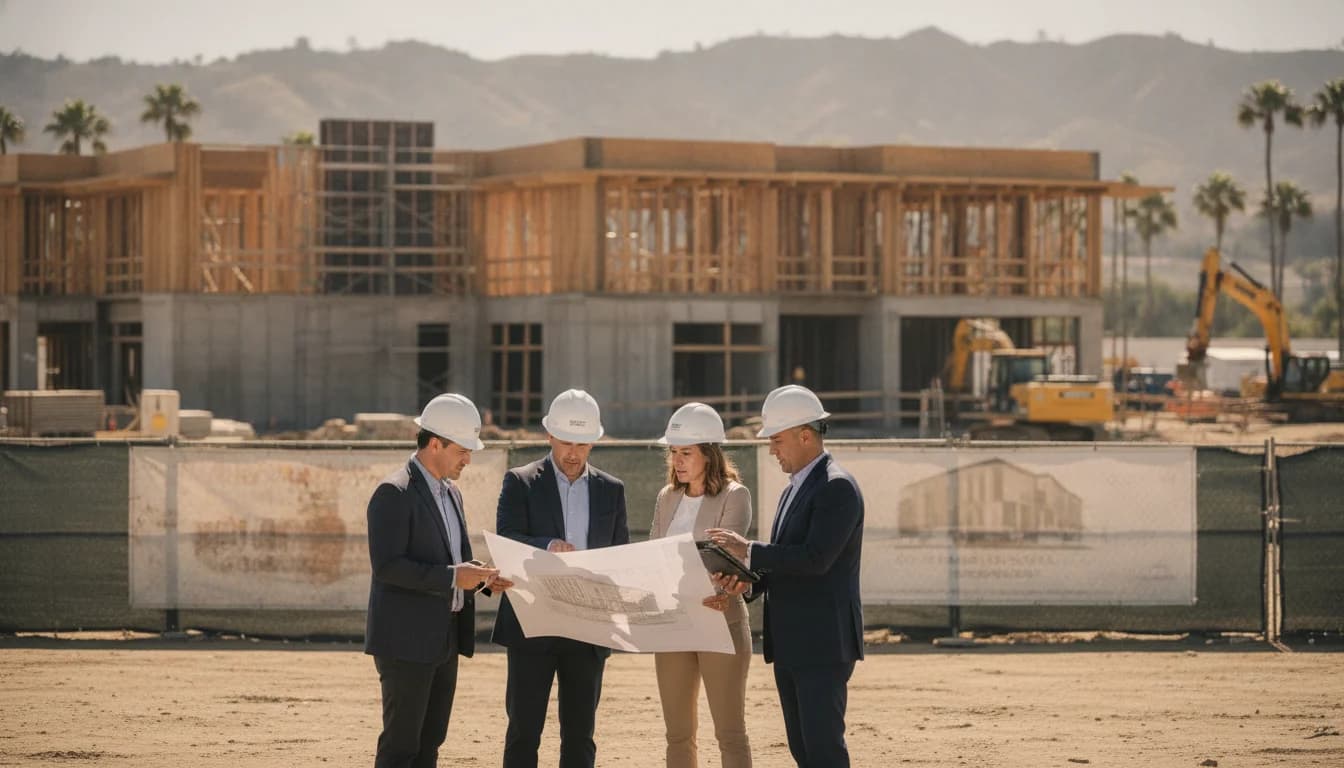
The city of Tustin gave Clearwater at Tustin Legacy an important first step toward adding senior housing at the heart of the sprawling Tustin Legacy project. On September 5, 2026, the Tustin City Council unanimously backed Clearwater at Tustin Legacy, a two-building senior housing concept on a city-owned parcel in the Neighborhood D South area near the southeast corners of Warner Avenue and Armstrong Avenue. This move marks a significant milestone for a development aimed at combining housing with services to support an aging population within a larger master-planned community that has evolved over decades. The decision matters because it signals continued momentum for mixed-use growth in Tustin Legacy and highlights the city’s approach to integrating housing with care services in a way that could influence future zoning, affordability considerations, and public amenities. The project sits on a roughly 6.14-acre site and reflects ongoing negotiations between developers and city authorities as they navigate affordability requirements and density bonuses under state law. [Los Angeles Times, Sept. 5, 2026] (latimes.com)
Clearwater at Tustin Legacy is part of a broader wave of housing and services being planned for Tustin Legacy, a 1,600-acre development long in transformation from former military property to a mixed-use district. The city’s current-project listings place Clearwater Living at Tustin Legacy at the SE corner of Warner Avenue and Armstrong Avenue, with development agreements, design reviews, and a density-bonus pathway among the key levers the city would use to realize the project. The project is described in city materials as a two-building complex, with a focus on age-restricted active-adult housing and a parallel assisted-living/memory-care component. The City of Tustin’s own project page confirms the site location and the entitlement-related status, noting that the development is in the entitlement review phase and outlining the involved permit packages. This framing is important for readers tracking how senior-housing initiatives are being realized on public land in a growing Southern California community. [Tustin City staff pages and current-projects overview] (tustinca.org)
What happens next in Clearwater at Tustin Legacy will hinge on compliance with state and local housing rules, the timing of development-agreement actions, and the pace of construction. The city’s CEQA documents offer a more precise picture of what the project entails and the milestones ahead. The Clearwater Living plan envisions two buildings on the six-acre parcel: Building 1 would include 172 units for active seniors, with 26 of those units designated as income-restricted, a configuration designed to qualify for a density bonus under state law. Building 2 would be an assisted-living and memory-care facility comprising 103 units and 134 beds. The plan includes a substantial 143,000-square-foot facility footprint dedicated to memory care and related supportive services. The project’s Notice of Determination, filed in September 2026, confirms the environmental and entitlement steps complete to date and points to the next rounds of approvals. The CEQA document also anchors the project in a CEQA framework designed to address environmental impacts, mitigations, and monitoring requirements. This level of detail matters for market-watchers assessing the program’s scale, timing, and the types of services the project intends to provide to residents. [Clearwater Living at Tustin Legacy CEQA Addendum; NOD filed Sept. 1, 2026] (ceqanet.lci.ca.gov)
Section 1: What Happened
Council Action and Timing
On Tuesday, September 5, 2026, the Tustin City Council took the first formal step toward adding senior-housing capacity at Tustin Legacy by backing Clearwater at Tustin Legacy. The unanimous vote to advance the project established a clear path toward development agreements, design review, and related entitlements for a city-owned site in Neighborhood D South. This action is notable because it marks a shift from planning documents to active project progression, setting the stage for subsequent votes on agreements and permits. The council’s action is also a signal that the city intends to weave senior-housing options into the Legacy mix, aligning with broader regional needs for elder care and age-restricted housing access. The council’s public-messaging emphasized coordinated community-building within the Tustin Legacy footprint, underscoring a goal of integrating residential living with supportive services in a way that supports aging-in-place for seniors. The decision came after a set of deliberations that included density considerations, affordability discussions, and the project’s fit within Surplus Land Act affordability requirements. For context, this milestone occurred as part of ongoing development activity within an area that has become a focal point for public-private partnerships and mixed-use planning. [Los Angeles Times; City of Tustin meeting coverage] (latimes.com)
Project Details and Scope
The Clearwater at Tustin Legacy plan contemplates two distinct buildings on a city-owned six-acre parcel. Building 1 would house 172 active-adult units, with 26 of those units reserved for lower-income households to support affordability goals. Building 2 would be an assisted-living and memory-care facility with 103 units and 134 beds, providing on-site services such as meal preparation and medication management. The project’s size and service mix are designed to address a growing demand for senior housing and support services within a centralized location that links to the broader Tustin Legacy community. The project’s total residential count is commonly cited as 275 units when counting the active-adult and the assisted-living components together, reflecting a deliberate approach to integrate different senior-living modalities within a single campus. The related state density-bonus framework is designed to reward affordable housing contributions with potential unit bonuses. The CEQA Addendum confirms these figures and anchors them in a formal environmental review process, reflecting the project’s scale and the complexity of approvals required for a mixed-use senior-housing campus. [CEQA document, Clearwater Living at Tustin Legacy Project; LA Times reporting on project scope] (ceqanet.lci.ca.gov)
Affordability and Community Feedback
Affordability has been a central topic in the Clearwater at Tustin Legacy discussion. The plan includes 26 income-restricted units within Building 1, a treatment consistent with CA density-bonus rules but elevating the affordability question within the Surplus Land Act framework. The Kennedy Commission, an affordable-housing advocacy group, raised concerns that the project’s affordability calculation might undercount the number of required affordable units under SLA guidelines, arguing for higher affordability commitments (the organization’s letter referenced in coverage indicated a 15% SLA baseline and called for additional consideration of 41 affordable units). The city and developers have engaged in dialog around these figures as part of the entitlement process. This tension reflects the broader challenge cities face in balancing density, affordability, and financial viability within the SLA framework for large-lot, city-owned parcels. The dialogue around this issue is a reminder that the policy environment—federal, state, and local—continues to shape how senior-housing projects like Clearwater at Tustin Legacy are structured and approved. [Los Angeles Times; City planning materials] (latimes.com)
Section 2: Why It Matters
Addressing Senior Housing Demand in Orange County
Clearwater at Tustin Legacy arrives at a moment when Orange County is evaluating how to meet rising demand for senior housing and on-site care services within a growing suburban landscape. While the Tustin city project page confirms the physical footprint (the SE corner of Warner Avenue and Armstrong Avenue) and the entitlement pathway, the broader context is the need for age-restricted housing and accessible care options in a region characterized by expensive housing markets and shifting demographics. Independent of the project’s specific figures, the policy question is how senior-housing campuses integrate into mixed-use communities in ways that are financially viable, environmentally responsible, and socially inclusive. The environmental review and the density-bonus framework used for Clearwater at Tustin Legacy illustrate how local agencies try to align housing policy with urban design goals while navigating affordability requirements that reflect state laws. This framing matters for policymakers, developers, and residents who track how new senior-living options fit within the county’s housing spectrum. [CEQA Addendum; HCD page on Surplus Land Act; ArcGIS StoryMap updates] (ceqanet.lci.ca.gov)
Implications for Tustin Legacy’s Development
The Clearwater at Tustin Legacy initiative sits within a larger tapestry of development activity in Tustin Legacy, an evolving master-planned district that has undergone multi-decade transformations since its MCAS Tustin origins. The city’s current-projects listing shows a variety of projects, including residential, retail, office, and community facilities, all connected by a network of streets, parks, and public amenities. The inclusion of Clearwater at Tustin Legacy signals a deliberate push to diversify housing types and to position senior housing as a core element of the Legacy’s future. The project’s status as “in entitlement review” underscores a careful, stepwise process—one that balances design review, development-agreement considerations, and public input as part of delivering a senior-living campus that could influence how future age-friendly projects are designed and approved within the city. The presence of a senior-housing campus in a high-growth area may also shape nearby commercial activity, transportation planning, and public-service provision, given the campus’s potential to attract residents, caregivers, and ancillary services to the Tustin Legacy area. [City of Tustin Current Projects; CEQA Addendum; ArcGIS StoryMap updates] (tustinca.org)
Market and Economic Context
From a market perspective, Clearwater at Tustin Legacy represents a notable example of senior-housing development that couples housing with care services on public land in a high-demand region. The proposed 275 total units (172 active-adult units plus 103 assisted-living units) and 134 memory-care beds reflect a comprehensive service model designed to support aging-in-place with on-site care. The memory-care component, described as a separate secure wing, signals the project’s intention to address cognitive-health needs within a single campus, which is a growing trend in senior housing. While local agencies work through affordability calculations under SLA guidelines, the broader market implications include potential ripple effects on how elder-care services are integrated into planned communities, how local zoning and development codes adapt to density-bonus schemes, and how public-land disposals under SLA are navigated to balance public benefit with developer viability. The formal consideration of affordability, integration with public amenities, and the project’s timeline will help calibrate expectations for similar projects elsewhere in the region. [CEQA Addendum; SLA background; LA Times coverage] (ceqanet.lci.ca.gov)
Section 3: What’s Next
Timeline and Next Steps
Looking ahead, Clearwater at Tustin Legacy will advance through a sequence of approvals and construction milestones. The City of Tustin confirmed that a second reading of the related Development Agreement, Ordinance 1580, would take place on September 15, 2026, as part of the ongoing entitlement process for Clearwater Living at Tustin Legacy. The CEQA documentation indicates that the City already approved key steps, including the Tentative Parcel Map, the Conditional Use Permit, and Design Review, and that the Notice of Determination was filed with an approval date of September 1, 2026. These milestones set the stage for a development timeline that would, according to the project’s proponents and the coverage surrounding the decision, bring the senior-housing campus closer to construction and eventual occupancy. The LA Times report notes the project could open its doors to residents within two years, a timeline that aligns with city expectations for development in a project of this scale. The combination of state-density-bonus provisions, local affordability considerations, and the city’s development agreements will continue to shape Clearwater Living’s path forward. [City of Tustin project documents; CEQA Addendum; LA Times] (tustinca.org)
What to Watch For
- Development Agreement and Ordinance 1580: The second-reading timeline and any changes to the development agreement will be critical. The city’s calendar and agenda materials will be essential for tracking whether amendments are introduced and how the final terms align with the project’s affordability, density-bonus, and operating-permit requirements. [City of Tustin agenda material] (tustin.granicus.com)
- Affordability and SLA Compliance: The Surplus Land Act requirements and the affordability covenant will likely be a focal point in the remaining entitlement process. Stakeholders will be watching for how the project’s affordable units are calculated and whether adjustments are made to meet SLA guidelines. The California Department of Housing and Community Development’s SLA guidance provides the broader policy context that informs local decisions. [HCD SLA guidance] (hcd.ca.gov)
- Construction Timeline and Occupancy: If the LA Times projection of occupancy within two years holds, the project could begin serving residents by 2028. However, construction timing can vary due to design-review cycles, financing, and permitting, so readers should monitor city announcements and the project’s public notices for the latest schedule. [LA Times reporting; CEQA timeline] (latimes.com)
Closing
Clearwater at Tustin Legacy represents a concrete example of how a mid-sized California city is embedding senior housing within a larger, master-planned community. The initial council endorsement on September 5, 2026, sets a path for a two-building campus that combines active-adult living with on-site care facilities, all on city-owned land in a strategic corner of the Legacy district. As the entitlement process proceeds, observers will be watching not only the numbers around unit counts and affordability but also how the project fits within California’s Surplus Land Act framework and how it aligns with Tustin’s broader goals for a resilient, walkable, and aging-friendly community. The coming weeks and months will reveal how Clearwater Living at Tustin Legacy navigates design reviews, development agreements, and public input to shape a senior-living campus that could influence future developments in Tustin and beyond. [City of Tustin; CEQA documentation; LA Times coverage] (tustinca.org)
-- Note: For readers seeking ongoing updates, the City of Tustin’s current-projects page remains a primary local source for entitlement milestones, while the CEQA documents provide the formal environmental and land-use context for Clearwater Living at Tustin Legacy. As the project advances through the next rounds of approvals, both city channels and independent outlets will be critical for the latest timelines, unit counts, and affordability calculations. The evolving story of Clearwater at Tustin Legacy offers a lens into how senior housing and care services are becoming more integrated within established master-planned environments in Southern California.
About the author
Los Angeles Monday
Content writer for Los Angeles Monday