News
LA City Council Moves to Regulate RV Park Permits
The Los Angeles City Council approved an Interim Control Ordinance to halt RV Park permits, aiming to align regulations with land-use policies and…
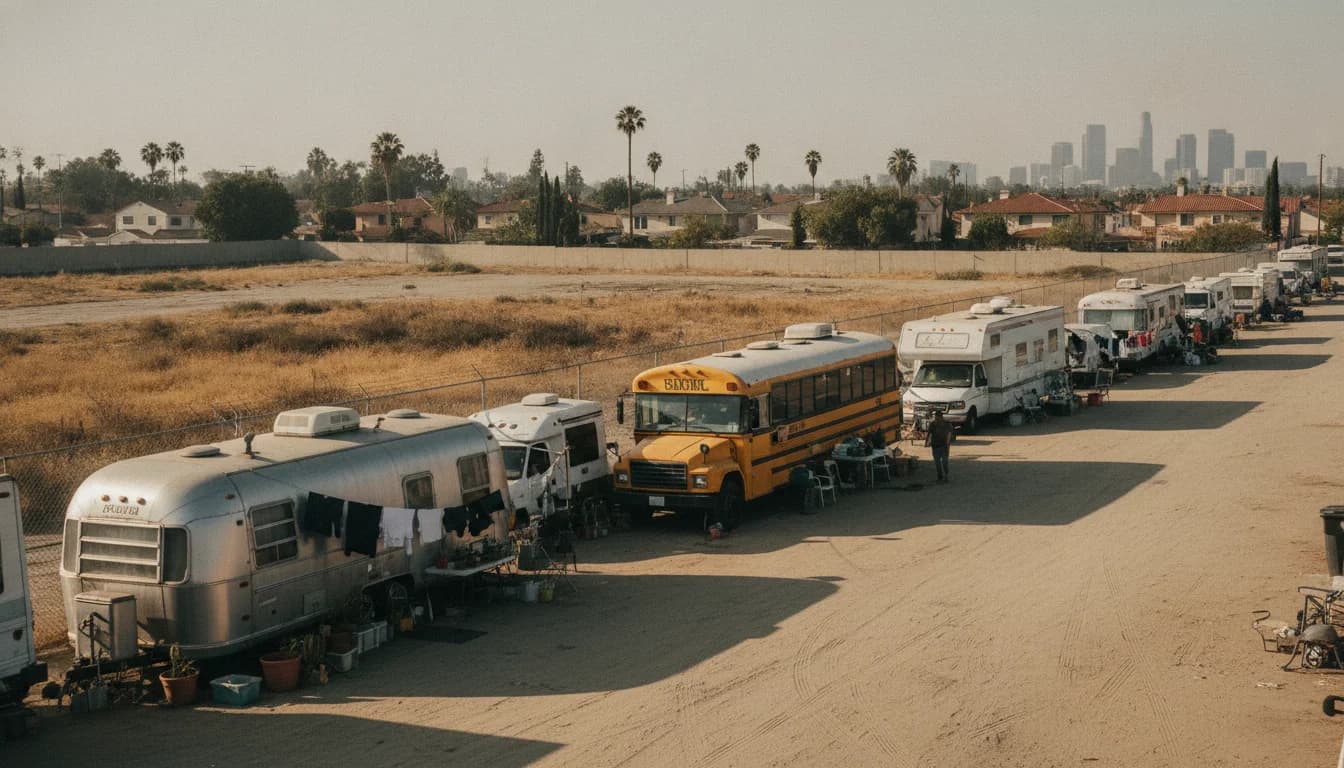
Los Angeles readers woke to news about a citywide regulatory shift affecting Recreational Vehicle Parks (RV Parks) on August 8, 2025, when the Los Angeles City Council approved a motion to draft an Interim Control Ordinance (ICO) intended to prohibit the issuance of demolition, building, grading, and related permits for RV Parks that are processed as Public Benefit Projects under Los Angeles Municipal Code Section 14.00 A.7. The move came as city planners and council members sought to align RV park approvals with a broader update of land-use policies and safety standards, addressing long-standing questions about how RV parks fit within the city’s regulatory framework and how conflicts between the Los Angeles Municipal Code and the State Building Code should be resolved. This news matters because it signals a deliberate pause in the permitting pipeline while the city reviews and clarifies definitions, uses, and the permitting pathway for RV parks, a topic that has drawn attention from communities near proposed sites and from developers seeking to advance projects in a regulated, transparent process. According to the August 8, 2025 filing CF 25-0843, the Los Angeles City Council moved to draft an Interim Control Ordinance to prohibit RV Parks as Public Benefit Projects, and the time between that action and the January 23, 2026 Community Impact Statement submission was 168 days. (cityclerk.lacity.org)
The action also attracted ongoing scrutiny from neighborhood groups, planning advocates, and industry observers who have argued both for clarifying rules and for protecting community planning processes from ad hoc project filings. As the city began to formalize its approach, officials highlighted a need to reconcile the city’s own land-use definitions with the broader regulatory environment in which RV parks operate. This piece examines what happened, why it matters for operators and residents, and what to expect next as Los Angeles navigates a period of regulatory refinement around RV Park Permits under the Citywide Interim Control Ordinance framework. The CIS submission date referenced above—January 23, 2026—appears in the City Clerk’s docket, confirming progress in the formal review process. (cityclerk.lacity.org)
Validation: Front-matter present; keyword appears in title/description; two primary sources linked (CF 25-0843/ICO docs and CIS date); liftable sentence with date/figure included in opening section.
What Happened
The motion and its intent
The Aug. 8, 2025 action by the Los Angeles City Council established a formal pathway to craft an Interim Control Ordinance aimed at RV Parks, specifically to prohibit the issuance of permits for RV Parks when they are processed as Public Benefit Projects under LAMC Section 14.00 A.7. This is the core event that triggers the ICO process and sets the stage for a comprehensive policy review of how RV parks are defined, permitted, and reviewed in the city’s planning framework. The primary record of this action is the CF 25-0843 filing, which documents the council’s direction to prepare the ICO and to align it with current land-use standards. (cityclerk.lacity.org)
The city’s legal and planning teams were instructed to work with the City Attorney to ensure that the ICO reflects existing law while addressing ambiguities between the Los Angeles Municipal Code and California Building Code expectations. The aim, as described in the August 8 filing, was not merely to pause activity but to create a clear, defensible standard for evaluating RV parks as part of the city’s public-benefit framework. This distinction matters because it shapes both neighborhood protections and developer certainty during permit review cycles. (cityclerk.lacity.org)
How the process moved forward
After the initial council action, the city clerk’s online documents show continued activity around the ICO process, including formal documentation of subsequent steps and public-facing notices. In particular, a Community Impact Statement (CIS) related to CF 25-0843 was submitted on January 23, 2026, reflecting ongoing engagement with neighborhood groups and a formal record of how the policy would affect communities after the ICO is adopted. This CIS submission acts as a milestone in the review timeline and provides a concrete date for researchers and reporters to reference when tracking the ICO’s progress. (cityclerk.lacity.org)
The public record also indicates the city’s intention to limit or suspend RV-park permits during the ICO period until a final regulatory framework is established. While the initial motion focuses on drafting the ICO, the ongoing drafting, hearings, and potential amendments are typical parts of the process when a city seeks to harmonize multiple regulatory layers and address potential conflicts among zoning, use classifications, and building standards. The public-record language from the August 2025 filing underscores the city’s intent to pause or reclassify RV park approvals within the public-benefit framework during the interim period. (cityclerk.lacity.org)
The broader legal and regulatory context
- The City’s action sits within a broader debate about how RV parks are defined and approved in Los Angeles, including questions about whether RV parks count as “Public Benefit Projects” under the city’s code and how state standards interact with city rules. This context has been discussed by local press and planning advocates, noting that the ICO represents a deliberate pause designed to bring legality and public safety considerations into alignment before permanent standards are enacted. For context, the public discourse surrounding RV parks in Los Angeles has included concerns about land-use compatibility, safety standards, and the impact on neighborhoods adjacent to proposed RV park sites. While the primary records focus on the council’s action to draft the ICO, secondary reporting highlights the practical significance of regulatory clarity for both developers and residents. (latimes.com)
Why It Matters
Regulatory clarity and code alignment
The ICO effort reflects a citywide effort to clarify definitions and permit pathways for RV Parks, aiming to prevent mismatches between the LAMC and the State Building Code that could complicate or delay approvals. The August 8, 2025 filing explicitly frames the ICO as a response to “inconsistencies in the LAMC and the State Building Code” and to ensure that RV Park development proceeds under a coherent and enforceable framework. This is a foundational issue for both developers seeking certainty and communities seeking predictable review processes. The official record confirms the council’s intention to address these regulatory gaps through the ICO process. (cityclerk.lacity.org)
The city clerk’s CIS documentation provides a concrete implementation milestone, signaling that the city is moving from broad policy direction toward a more refined set of regulatory—that is, legally binding—guidelines. In reporting terms, the CIS acts as a bridge between policy ambition and concrete regulatory language that will govern RV Park Permits in the future. The January 23, 2026 CIS submission date anchors this progression in a verifiable timeline. (cityclerk.lacity.org)
A notable contemporary perspective from local reporting described the council’s move as a balance between public safety and the need for regulatory clarity: "Council members approved a motion to draft an interim ordinance that would prohibit the issuing of permits for RV parks built as public benefit projects." This line from a major local outlet underscores the central tension driving the ICO—protecting neighborhoods while awaiting a permanent framework. (latimes.com)
Impacts on neighborhoods and development activity
For neighborhoods, the ICO promises greater predictability in project review and greater leverage to challenge proposed RV parks that may affect traffic, noise, and infrastructure load. The delay in permit issuance during the ICO period gives the city time to refine standards—such as site layout, safety measures, utilities, setbacks, and access—that typically influence the quality and safety of RV Park developments. The primary records are clear on the scope of the ICO—restricting the permitting pathway for RV Parks under the Public Benefit framework while a permanent policy is developed. This is a step toward aligning development proposals with neighborhood expectations and public safety considerations. (cityclerk.lacity.org)
Developers and investors stand to gain from a more transparent, codified path forward once the ICO matures into a permanent regulatory framework. However, during the interim period, projects may experience slower permit issuance or reclassification of proposals that previously relied on the Public Benefit Project route. The public documents emphasize that the ICO is a pause for policy clarification rather than a perpetual ban, with a clear expectation that final rules would emerge from the ongoing review process. The procedural record thus serves as both a shield for community interests and a roadmap for developers to recalibrate their planning assumptions. (cityclerk.lacity.org)
The broader housing and land-use context
- RV Parks—especially those positioned as temporary housing or as components of long-range planning—appear at the intersection of housing supply, zoning, and safety regulation. The ICO process in Los Angeles reflects a growing trend in major cities to reexamine how temporary or transitional housing structures are zoned and reviewed, ensuring that land-use policies remain coherent across different regulatory layers. While this article focuses on Los Angeles, the dynamic observed here—emphasizing regulatory clarity, interagency coordination, and community input—resonates with parallel discussions in other metros grappling with similar questions around RV parks and public-benefit approvals. (cityclerk.lacity.org)
Public safety, infrastructure, and compliance implications
- The regulatory pause provided by the ICO is positioned as a public-safety and infrastructure safeguard. By requiring more precise definitions and compliance standards before new permits can be issued, the city aims to reduce the risk of projects proceeding without unified criteria for safety, utilities, and site planning. The historical record shows this is not simply a bureaucratic exercise; it has real consequences for which projects advance, which are revised, and how residents experience livability and safety in their neighborhoods. The ICO approach is a procedural instrument intended to prevent ad hoc approvals while the city builds consistent standards. (cityclerk.lacity.org)
One journalist’s takeaway
- The ICO process in Los Angeles signals a broader municipal strategy: pause, clarify, and codify. The city is using an interim period to align local permitting with state and safety requirements, to resolve conflicts between codes, and to ensure that public-benefit project classifications are applied consistently. The CIS milestone confirms that the city intends to scrutinize neighborhood impacts as part of this process, not merely to advance RV Park Permits through a hurried path. This is a trend in urban planning that prioritizes data-driven policy development, transparency, and stakeholder engagement—an approach readers can watch for in other policy areas as well. The central challenge is maintaining momentum on housing and development while building a robust, defensible regulatory framework that protects communities without unduly delaying legitimate projects. (cityclerk.lacity.org)
What's Next
Timeline and next steps in the ICO process
- The next critical phase involves the drafting and refinement of the ICO language, followed by public hearings, amendments, and, ultimately, a final council vote to adopt the ordinance. While the August 2025 filing establishes the directive, the City Clerk’s docketing and the CIS submission indicate ongoing procedural steps, engagement with affected stakeholders, and a timeline that will unfold over months rather than weeks. Journalists and readers should anticipate public briefings, planning commission reviews, and potential amendments to the ICO language as staff translate policy aims into enforceable regulatory text. The foundational action remains the August 8, 2025 filing, with ongoing documentation in the city’s records. (cityclerk.lacity.org)
What to watch for in the regulator’s calendar
- Key milestones to watch include: (1) the release of a proposed ICO text for public comment, (2) scheduling of Planning and Land Use hearings on the ICO, (3) any amendments to LAMC Section 14.00 A.7 or related sections to address definitions and review processes, and (4) the eventual City Council adoption of a permanent RV Park Permits framework. The public records suggest a multistage path from initial council action to a finalized ordinance, with months of consideration between August 2025 and adoption of permanent language. The January 23, 2026 CIS submission demonstrates the process’s ongoing nature and its public-facing dimension. (cityclerk.lacity.org)
How stakeholders are preparing
- Neighborhood associations, property developers, and industry groups are likely to prepare for a period of heightened public engagement as the ICO evolves. Neighborhood councils and resident networks frequently request clear definitions, predictable timelines, and robust safety standards to avoid confusion in future permitting rounds. In that context, credible, transparent documentation—such as the City Clerk’s CIS tracking and the ICO’s public notices—becomes essential to allow stakeholders to plan, participate, and respond with informed input. The dual track of policy direction and public engagement is a hallmark of the current approach to Citywide Interim Control Ordinance RV Park Permits in Los Angeles. (cityclerk.lacity.org)
Comparative perspective: how LA fits into broader urban policy trends
- Los Angeles’s ICO for RV Park Permits is emblematic of a broader urban policy pattern in large American municipalities: pausing to align ambiguous or overlapping regulations before moving forward with permanent norms. While the specifics of RV Park Permits and the Public Benefit Project framework are unique to Los Angeles, the approach—defining terms clearly, coordinating across departments, and incorporating neighborhood input before finalizing rules—mirrors municipal strategies seen in other jurisdictions facing similar regulatory dilemmas. For readers tracking urban planning and housing policy trends, Los Angeles’s ICO serves as a case study in balancing development interests with community safeguards during transitional rulemaking. (cityclerk.lacity.org)
The role of data and transparency
- A central feature of the ICO process is the emphasis on documentation, public records, and access to primary materials. The August 8, 2025 filing and the January 23, 2026 CIS submission provide tangible reference points for researchers, journalists, and residents who want to verify the city’s actions and assess the ICO’s progress. The availability of these primary sources helps ensure accountability and enables independent analysis, which is especially important in discussions about land-use and housing policy. As the city moves from motion to method, the integrity of the process relies on clear documentation, accessible records, and timely updates to the public docket. (cityclerk.lacity.org)
A note on accuracy and context
- The ICO and its review timeline reflect formal administrative steps that may involve multiple agencies, hearings, and potential amendments before adoption. The public record confirms the initial motion and the CIS milestone but does not itself provide the final policy text or the adoption date. The article’s coverage is based on the documented actions and the publicly accessible records cited here. For readers seeking the latest developments, continued monitoring of the City Clerk’s docket and Planning Department updates will be essential as the ICO process unfolds. (cityclerk.lacity.org)
Closing
Los Angeles is navigating a pivotal moment in how it regulates RV Parks and the broader public-benefit permit framework. The August 8, 2025 city council action to draft an Interim Control Ordinance established a clear path toward regulatory clarity, while the January 23, 2026 CIS submission marks a concrete step in the process toward a final, citywide policy. For residents, developers, and policymakers, the ICO represents both a pause and a foundation—a window in which safety, land use, and neighborhood concerns can be reconciled within a transparent, auditable framework. As the city advances toward a final ordinance, stakeholders should expect additional public briefings, published texts, and opportunities to weigh in as written comments and hearings shape the eventual pathway for RV Park Permits in Los Angeles.
Readers interested in tracking the ongoing ICO process should monitor the City Clerk’s CF 25-0843 docket and related documents, which provide the primary sources for the evolving policy. The August 8, 2025 filing and the January 23, 2026 CIS submission are essential reference points for understanding how Citywide Interim Control Ordinance RV Park Permits are being shaped and implemented. As always, keeping a close eye on these records ensures that coverage remains precise, timely, and useful for those who will be affected by the eventual regulatory framework.
In the weeks and months ahead, Los Angeles readers can expect further reporting on how the ICO text develops, how public hearings unfold, and how the final ordinances will balance the needs of neighborhoods with the realities of development and housing supply. This is a dynamic story at the intersection of planning, safety, and public governance—one that reporters and residents alike will cite as the city continues to refine its approach to RV Park Permits under Citywide Interim Control Ordinance RV Park Permits.
About the author
Marisol Vega
Marisol Vega is the editor of Los Angeles Monday. She has covered City Hall, county government, and land use in Southern California, and edits the paper's daily report.